Nothing much

Walkway into BRIT. I love shadows!

Walkway into BRIT. I love shadows!

It seems that there’s not much getting done around here, but when I look back, I realize that’s not true. September 12 was Fall Gallery Night, so there was work to be done there. Fort Worth Weavers Guild had their biennial show at CAC, so that had to be hung. The Fort Worth Art Collective had a pop-up at BRIT, so work had to be delivered and then picked up at the end of gallery night. Plus, there’s weaving to be done, and somehow, real life gets in there too.

American Beautyberry-Callicarpa americana

American Beautyberry-Callicarpa americana

The grounds at BRIT (Botanical Research Institute of Texas) are covered in native plants. Above is American Beautyberry. It’s so pretty this time of year. So, as I walked in, not only were the shadows from the walkway beautiful, but so were the plants. The grasses are in full seed-head mode. Too bad it’s hard to get good pictures of them with a phone. But the shadows–look at the ones on the pillars of the entrance, which I didn’t even notice until I saw the picture I had taken. The ones on the walkway were sufficient for my eyes. BRIT is located near the Fort Worth Botanic Gardens, so as I was leaving, I had to take a picture of the plants at their entrance. I have no idea what they are, but I suspect some kind of lily. Is this the year I finally join one of the many garden clubs that meet there? Plus, I’ve been mulling over how to hang a couple of pieces that are horizontal. My first plan didn’t work. More on that later too.

Fort Worth Botanic Gardens
Fort Worth Botanic Gardens

48 inches woven

48 inches woven

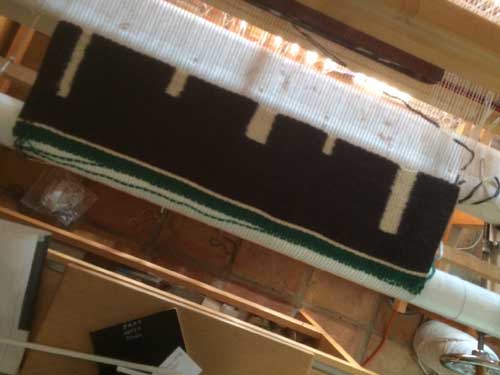
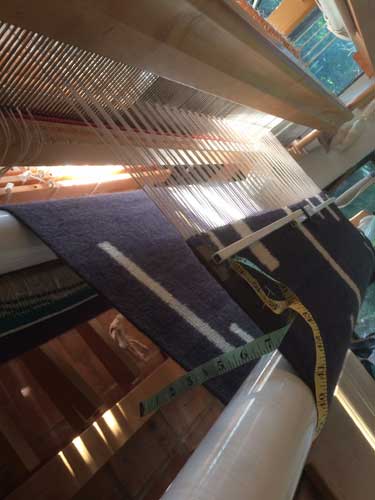
So here’s where I start for the day. I’ve been trying to get 10 inches woven per day. Sounds like a puny goal, doesn’t it? Even though this ikat weaves much faster than tapestry, it’s not like just throwing a shuttle back and forth. Each of the design motifs has to match up before beating. With ikat, a new motif pops up, and it has to begin in a place that will maintain selvedges. Sometimes, sections have to be rewoven just to maintain those selvedges. At first, as I was weaving, I kept notes on the measurements and compared them with the cartoon measurements, hoping to find some sort of formula to use in planning future projects. Maybe a mathematician could do it, but so far I can’t. My next project, to finish off this warp, will be purely experimental ikat. More about that later. And speaking of warp, I’ve got some ideas about warping going around in my head. I need to take some pictures and get opinions from you. Will it work or not? That’s for later too. Right now, I need to finish what’s on the loom.

What’s going on in your world. Weaving? Personal projects?


A studio notebook

Smoke-the weaving has begun


Ikat Notes Studio

Ikat Notes Studio

Notes on measuring ikat

Notes on measuring ikat

Something new for me, a studio notebook. While measuring ikat on the board, I weighed each ball of yarn before and after. Then I wrote down the section number and how much yarn was used, hoping I would have a pretty accurate way of knowing how much dye to use. On the right is the weight of each section. I then plug this information into my spreadsheet to get all the dye formulas I need. The left side has notes made while doing the measuring part. You can even see my note from a phone call about a new crown! Exciting stuff, this! This method is working well for the dyeing, so far. At least I think so.

Smoke in progress

Smoke in progress. By the way, the top picture is more color accurate. The color is charcoal, not black.

I am now weaving, the fastest part of this process. I normally take some notes when I start, but usually on a notecard.

notecard

notecard

I record the date started, how I began (as in twining, knots, etc), so that I can end in the same way. Sometimes tapestry takes so long, I forget what I did in the beginning. Even though it’s not visible in the picture (the pen I used is almost out of ink), I also recorded the width in the reed, the width of the woven cloth with and without the temple. I’m really trying to get a handle on the ikat part, so as soon as one of the design motifs is done, I am going to record the size of the woven one to compare to the cartoon one. So, while I am writing all of this on my notecard, (duh!) it occurred to me that I should be using the same notebook with the measuring notes.

Any hints you could share about your record keeping? Do you keep a record of weaving notes? Or other project notes? What’s your method?

Sequence of events

Ikat tied and laid out in order

Ikat tied and laid out in order

The last batch of yarn is ready to be rinsed and untied. It takes me about an hour and a half to untie a section. I use my seam ripper to slit the tape under the knot, then unwrap the ikat tape. This needs to get finished or I need to find a neater way of doing things. The towel is there because I usually do this while the yarn is still damp, hoping to not have so much compression of the yarn. Not sure it works.

Ikat leavings

Ikat leavings


Dyeing

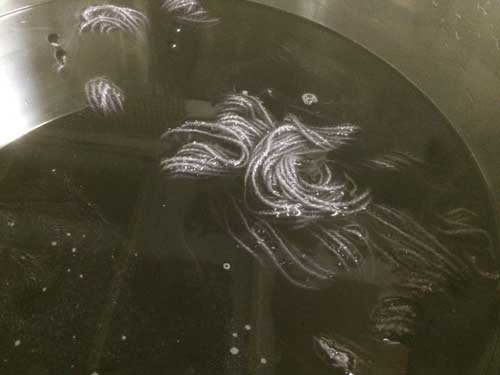
Yarns in dyepot

Untied

Untied

Balled up and ready to go

Balled up and ready to go. And, no, these yarns are not different colors.

Today’s task–start weaving, adjust the warp width multiple times until I find the “perfect” width, then weave another header and start weaving. And then there’s the bit about a visit to the dentist and a chipped tooth.

Taking the day off

Ikat tied and laid out in order

Today is declared to be a day off–after cleaning the studio. All of those bits of ikat tape are driving me nuts. If I would wear shoes, I probably wouldn’t find them all over the house, but …

Though, I say it’s a day off, it really isn’t, but it will be spent doing things other than tying ikat, which, by the way, is done for this project. I laid all the sections out in order to take the picture above and discovered that I had not done one section. You can see the cartoon on the left. Back to the ikat table and NOW I’m done. As for those other things, the list is a mile long, but maybe a visit to the book store will be added and crossed off first.

Spice of the month club

Spice of the month club

For Mother’s Day, my daughter gave me a subscription to the Spice of the Month Club. After rolling my eyes at this, my sisters and I thought this would make a fun once-a-month dinner for us to have at our mother’s house. We decided that five-ish on a Sunday would be good for all of us. I will cook the recipes that come with the spices, and everyone else would bring something to go with the month’s theme. We’ve done this once now and declared it good. As you can see from the picture above, last month’s theme was Jamaica. I’m not a huge fan of jerk, but this was used on fish, and surprisingly, everyone enjoyed it, especially with the mango salsa. This month I get to cook ribs for the first time in my life, and make ice cream in the ice cream maker I bought on sale and never used. The theme is Memphis spice. Spice ice cream, anyone?

Addendum: I have removed all links because I was receiving several emails per week about these links from the company. Sometimes more than once daily. Evidently they were broken, but the information contained here can no longer be found anyway.

There is a problem with this whole thing, however. These recipes can never be duplicated. You can’t buy the spices individually or even the grouping for the month. I asked.

The next dinner will have a Baltimore spice theme and include shrimp. Yum!

The same

Illusion

As far as I’m concerned the word boring and all its derivatives should only be used in very rare occasions.  After all, we do have the ability to do something else more entertaining–except when the job has to be done. That’s where ikat-tying is for me right now. It’s got to get done. I nearly always cut my cartoons up because they’re easier to handle, although I could probably roll them up, advancing the next section as one is finished, but I don’t. Of course, when the cartoon is cut up, lots of labeling has to be done. I number each section, write top and bottom so I will have orientation, and mark the center line, so that there is continuity from section to section to the whole. The only consolation is that I’m listening to a book that keeps my attention, although I can’t say it’s great literature. When my back tells me it’s time for a break, I move on to other things, although I do try to finish one section per day, at least. Door

So, moving on to other things…for a couple of days that involved using a new-to-me app called Art View. This is an app that lets you insert art into a room setting. I am using the free version, which has three rooms to choose from. If you want to pay, you are allowed to upload more art and have more room choices. I’m not convinced that’s a good deal. You can also take a picture of a room with the paid version. Once you upload your art, you can choose a room and place the art in the room. You can resize the art and move it across the wall to a location you like. Kind of fun.

Purple-Haze Try it out. Tell mo what you think. And hurrah! Only two sections of ikat to go!

Ikat trimmings and other art

Ikat-trimmings

Ikat Trimmings,  Sherri Coffey 😉

A different view of what I’ve been doing. These bits of ikat tape that are trimmed after tying are just thrown on the floor, and since I work barefoot, they have a tendency to get tracked all over the house. Yes, it would be better to drop them in a trash container, but they float to other locations in that process, so why bother?

_____________________________________________________________________________________

Below are some more photos from the Friday night art receptions at the Community Arts Center. There is some wonderful art displayed at the center.  Things that catch my eye are usually whimsical, pieces that I admire the skill involved, unusual materials. or just plain appeal to me for whatever reason. And of course, I could not take pictures of everything!

Sylvester-Potter

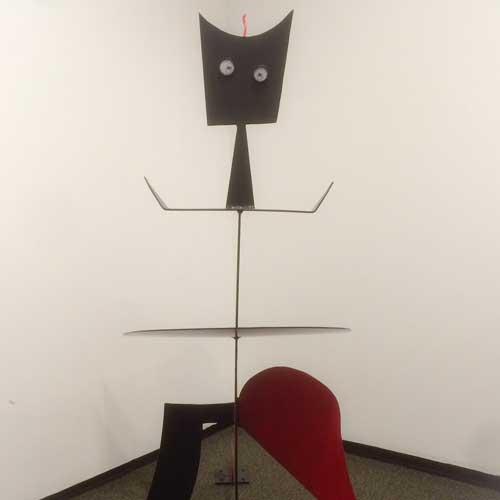
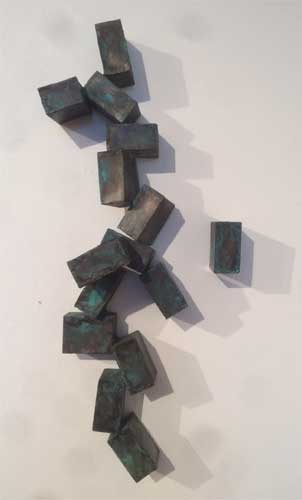
Large metal sculpture: Sylvester by Stephan Potter

Stephen Potter

_____________________________________________________________________________________

Menthol-Mood-Lamb

The Menthol Mood by Nancy Lamb

Nancy Lamb

_____________________________________________________________________________________

Geo-Bise

Geo, watercolor, Megan Bise

Megan Bise

_____________________________________________________________________________________

Shape-Shifting-Low

Shape Shifting by Rebecca Low

Rebecca Low

_____________________________________________________________________________________

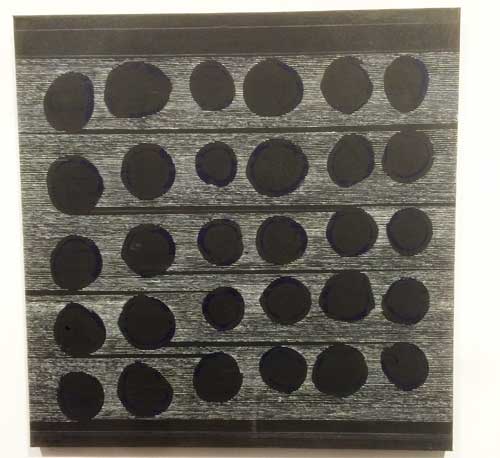
I wish my photo could capture the color better in Linear Meditation, below. Within the circles are bits of blue around the inside edges. There’s a much better picture on her website.

Linear-Meditation-Friedman

Linear Meditation, acrylic, graphite powder hand-applied, oil lines, Jan Ayers Friedman

Jan Ayers Friedman

_____________________________________________________________________________________

Resurgence-Hyun

Resurgence, oak and aluminum, Joe Hyun

Joe Hyun-I can’t find a web presence for this artist. CAC website on TAC exhibition

_____________________________________________________________________________________

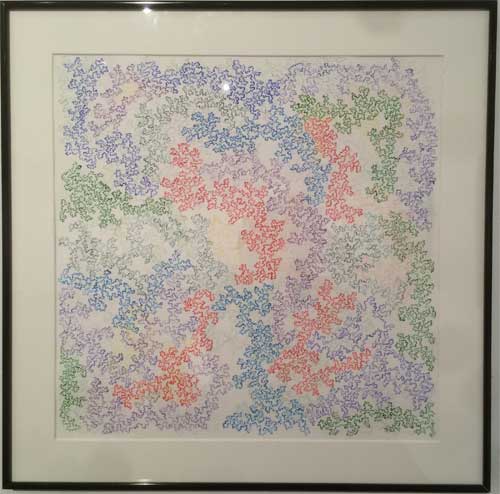
The picture below is watercolor, a medium that I wish I could use. I am amazed at the tiny lines in the piece that are created with watercolor.

Karen Ferrer and info here

So, what do you think about this week’s art selection? Is there a favorite? Tell me yours and I’ll tell you mine. 😉

How does it happen?

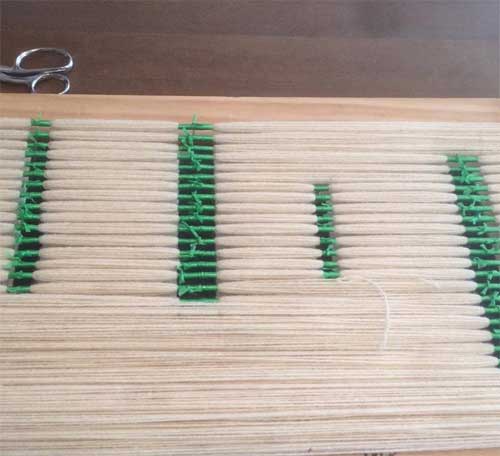
Ikat progress-repeat 10 times

Ikat progress-repeat 10 times

How does it happen that some weeks are full of appointments and activities with no time left for work? That’s this week. In between having to leave for the various whatevers, you can see what I’m doing above. AND, may I say, I am so happy I kept fairly good notes when I wove this previous version of this design. This time around I am trying to actually track time and the amount of yarn used in each section. Why? I am tracking time to get a better estimate of how much time it takes to finish a project. As for the yarn–that’s a dye issue. Since I dye based on the weight of yarn, I am going to start with that number and estimate how much is covered with ikat tape, so that I can get the desired color. At least that’s the plan.

Last Friday were the artist receptions, including the TAC Juried Exhibit. I took lots of pictures. The picture below is from a gallery with the room full of these sculptures. Quite impressive! Nearly all are sold, except for the biggest ones. From Stacy Elko’s website: “They are constructed with flexible cane, handmade paper sealed to the cane and embellished with North African henna iconography.” See more on her website.

Fish Bomb Boat

Fish Bomb Boat #19 From 7-Stacy Elko

Tuning Fork #20 Heather Pregger

Tuning Fork #20 Heather Pregger

Heather Pregger has a whole series of art quilts based on the tuning fork. I like seeing a series like this and how for you can take a simple shape and fly away with it.

Big Yellow Apple, Martha Bean, oil on canvas, 48" x 48"

Big Yellow Apple, Martha Bean, oil on canvas, 48″ x 48″

You need to read Martha Bean’s artist statement. Seven lines, clean and simple, like her art. She also has pictures of other art, plus more apples here.

Tick, Tock, the Game is Locked by Janet Morrow. Cast sugar

Tick, Tock, the Game is Locked by Janet Morrow. Cast sugar

Janet Morrow’s piece is very unusual and dominates the space. Tick Tock, the Game is Locked… Yes, you read correctly–constructed of cast sugar.

There are more pictures, but they’ll have to wait. More tasks, appointments, events await. But just out of curiosity, of the ones posted here, which do you like best?


In praise of power tools

Hanging boards cut and painted

Hanging boards cut and painted

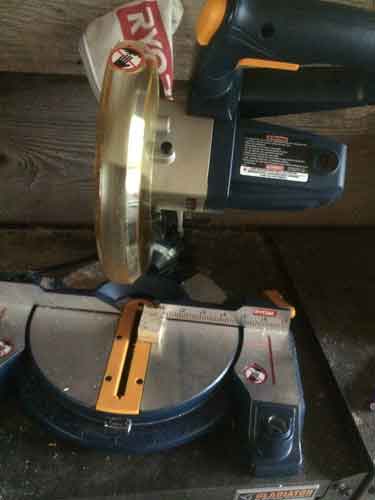
For years, I have been cutting the hanging boards with my jig saw and doing a very poor job of it. I could never seem to cut really straight. The top of the board might be cut exactly on the line, but the cut would angle as it got to the bottom of the board. Then I used a hand miter saw. Better results, but a lot of elbow grease.

Miter saw

Miter saw

Finally, I got an electric miter saw. I can cut angles with it, but I don’t. Straight edges, that’s it so far. Works like a dream.

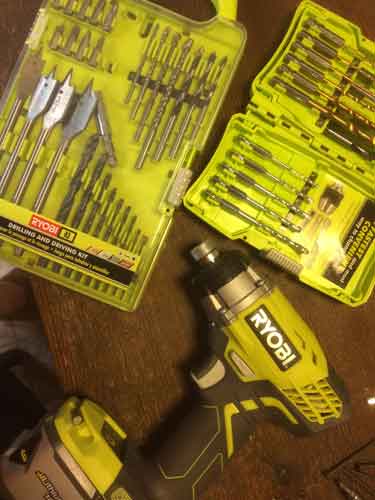
I’ve been gradually making my life simpler with better power tools. Battery-powered power tools. The miter saw has to be plugged in, but my drill and sander don’t. The drill has had some heavy use lately and did not run out of juice. I then put the drill battery on the sander and sanded some boards. Still had juice.

Drill and bits

Drill and bits

Sander

Sander

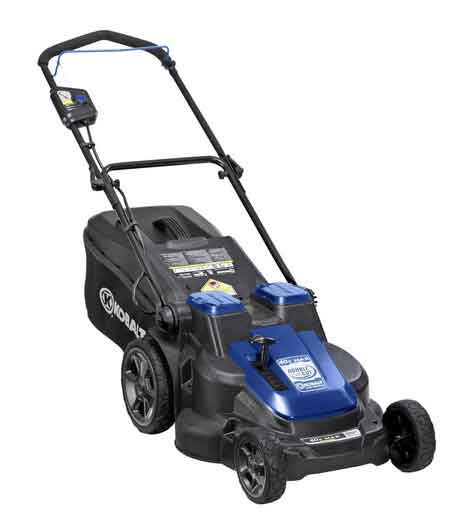
Mowing my lawn became quieter this year. I bought a new battery powered mower. I really hesitated since I mow quite a bit, not because I have a manicured lawn, but to just keep the weeds down. The mower is so much easier to push around. I still have the old gas powered one for the really rough stuff, but regular mowing is done by battery power.

Kobalt mower

Kobalt mower

And then there are the weeds in the hard-to-reach places. Gas string trimmers have never been my friends. In fact, they hate me. Won’t start, string runs out or catches on something–anything to make a simple job take three times as long to complete. Enter the battery powered string trimmer and brush cutter. This tool has attachments that can be added by removing the string trimming part and replacing it with something else. After using the brush cutter, that string trimmer may never be used again. In full disclosure, I do use the brush cutter while wearing boots, just in case.

String trimmer

String trimmer

Brush cutter attatchment

Brush cutter attatchment

What are your favorite tools? Do you get lost in hardware stores, browsing all the myriad of choices?

10th Annual TAC Juried Membership Exhibition

Prairie Tain

Prairie Rain


10th Annual TAC Juried Membership Exhibition

10th Annual TAC Juried Membership Exhibition

August 7 – 29, 2015
Awards: 7pm on August 7

Juror Cohn Drennan of Cohn Drennan Contemporary selected 40 artworks by 39 Texas Artists Coalition members from the 106 members who submitted. The mission of the TAC is to support the career development of artists, whether they are emerging or established, amateur or professional.

The following artists were accepted in the exhibit:

Scott Anderson, Amy Barrington, Brad Barrington, Bill Barter, Martha Bean, Carol Benson, Susan Brents-Sheldon, Jim Brightwell, Rick Bullock, Lou Chapman, Lauren Childs, Sherri Coffey, Suzan Cook, Patricia Cowan, Lisa Cunningham, Gen MM Farell, Karen Ferrer, Anastasia Gabriel, Thomas Helmick, Lee Hill, Joe Hyun, Ellie Ivanova, Nancy Lamb, Cynthia Lewis, Rebecca Low, Mitchell Marks, Lorrie McClanahan, Zahra McGinnis, Erin Miller, Janet Morrow, Teri Muse, Lee Alice Pablo, Heather Pregger, Valerie Ramos, Gary Reams, Britt Stokes, Chris Thames, Robertus van der Wege, Dotty Zamora

See more here.

How to waste time in just a few easy steps

I read a post by artist Karin Olah about how she has her art printed via Spoonflower to use on notecards. Here’s what Karin does:  Spoonflower prints my art image on cotton. Then I sew it to a blank card, adding a few fabric embellishments. Since my artwork is Mixed Media painting with fabric collage – the fabric touch is fun. Here is the example I saw. You can see the fabric touches she added later.

Karin's note card. Notice the fabric embellishments

Karin’s note card. Notice the fabric embellishments

Below is the original image.

Looking Towards Shelter, fabric, gouache, pastel, and pencil on canvas, 6 x 4 inches

Looking Towards Shelter, fabric, gouache, pastel, and pencil on canvas, 6 x 4 inches

Karin has done this before with completely different work. Instead of landscapes, still lifes.

Limited edition series of quilted art cards. These cards start with a high quality print on Kona Cotton; then they are hand stitched with machine embroidered silk leaves and highlights added. Each 5 x 7 inch card is unique, signed, and numbered.

Limited edition series of quilted art cards. These cards start with a high quality print on Kona Cotton; then they are hand stitched with machine embroidered silk leaves and highlights added. Each 5 x 7 inch card is unique, signed, and numbered.

Granted, her work is mixed media, which involves using fabric, paint, gouache, and pastels on paper. Karin’s originals were also 6 x 4 inches, which is the size of her Spoonflower prints. Still, I had to try. This could be addicting!

If I were going to use these on a card, I would then cut out each motif and attach it to a card. A slight warning here…It took me a bit to get the hang of their system. Finally, I reduced all of my images so that the neared a 4 x 6 in. size, then chose to see a full yard of basic cotton.


  • First, upload your image
  • Change the size so that it might be somewhere around 4 x 6.
  • Choose how much fabric
  • Repeat as needed.
©Sherri Coffey-Summer Stripes

Summer Stripes, hand-dyed wool yarns, tapestry, Private collection

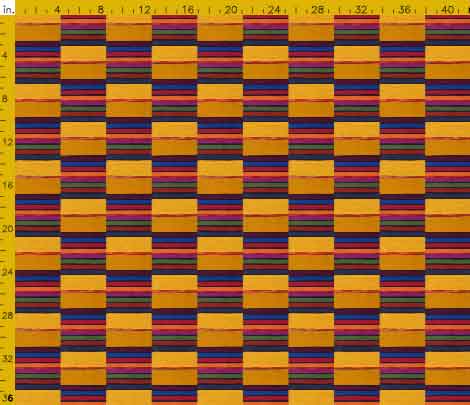
Amazing how the design looks so different when used in multiples. The Spoonflower version below is the Summer Stripe from above.

Summer Stripes, used in multiples for fabric design. Original: tapestry, 36.5" x 60", ©Sherri Coffey private collection

Summer Stripes, used in multiples for fabric design. Original: tapestry, 36.5″ x 60″, ©Sherri Coffey

Here are some more Spoonflower designs with their originals.

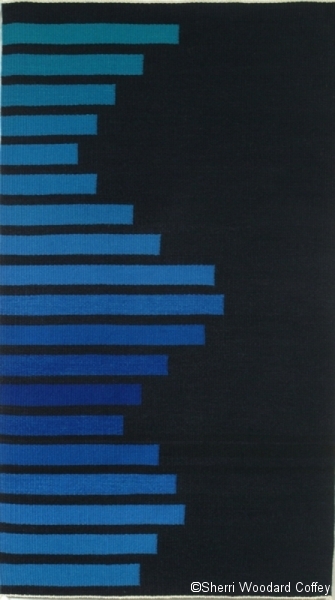
©Sherri Coffey-Deep, Cool Water

Deep, Cool Water, hand-dyed wool yarns, tapestry, 44.5 x 24 inches. ©Sherri Coffey, Private Collection

Deep, Cool Water, hand-dyed wool yarns, tapestry, 44.5 x 24 inches. ©Sherri Coffey, Private Collection

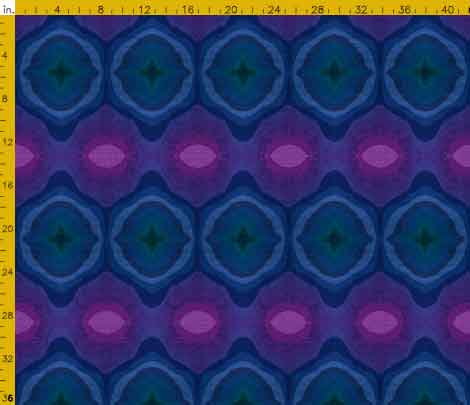
Same as above but used in multiples. Original: Deep, Cool Water, hand-dyed wool yarns, tapestry, 44.5 x 24 inches. ©Sherri Coffey

Same as above but used as mirror image. Original: Deep, Cool Water, hand-dyed wool yarns, tapestry, 44.5 x 24 inches. ©Sherri Coffey

Same as above but used as mirror image. Original: Deep, Cool Water, hand-dyed wool yarns, tapestry, 44.5 x 24 inches. ©Sherri Coffey

©Sherri Coffey-Sine Wave

Sine Wave, hand-dyed wool yarns, tapestry, 34″ x 61.75″

Sine Wave, mirror image

Sine Wave, mirror image

Sine Wave, multiples

Sine Wave, multiples

©Sherri Coffey-Wari

Wari, weft-faced ikat, hand-dyed wool yarns, 48 x 27.75 inches ©Sherri Coffey Private collection


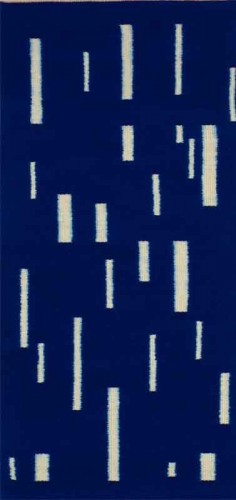
Purple Rain, wool ikat, linen, dyes, 60 x 28 in, Private collection ©Sherri Coffey

Will I print these any time soon? Probably not, but the idea is worth pursuing at some point. Maybe I would even embellish with added bits. Try it for yourself, if you haven’t already. Have some fun, waste some time!