Category Archives: Uncategorized

Thanksgiving

Altar_Mi_TierraIn this season of gratefulness, I am thankful for:

  • a father who always told his children that they could do and be anything they wanted
  • a mother who always pointed out the colors and beauty in nature on our drives in the country to visit grandparents and color sense every season when we shopped for clothes
  • the good, interesting, and thoughtful adults that my children have become; I would like them even if they weren’t my children!
  • genetics, and the nurturing of the creative self
  • parents who taught their children how to be responsible adults and valued education
  • for the opportunity to pursue my creative side
  • health, family, friends, and good books—of course!
  • the wonderful fall weather outside with its beautiful, colorful clothing
  • medical miracles
  • the generosity of weavers with ideas and help
  • the sheep who give us their wool
  • art in all its forms
  • and last—but not least—grateful for never having to cook a turkey!

The more I think about this, the longer the list could be, so I’m stopping now. Happy Thanksgiving!

Hand-loomed linen and art

imageMark Barrow paints on stretched linen hand-loomed by his wife, Sarah Parke, picking out the all-over patterns of her textiles even as he blocks out his own, crazy-quilt-like compositions.

When I saw the words “hand-loomed” in the above quote, I had to investigate this artist further. The words come from this article in the NYTimes, always a wonderful source for art news. The picture comes from the Elizabeth Dee gallery. More pictures can be seen in this blog post.Bathroom-shelvesI have spent the last two days doing a little organization, with only two goals: my bedroom and the shelves in the bathroom. Admittedly, I have only done a partial reorganization, but lots of trash has gone out. Those guys are really loving me, right now—NOT! The rest of the stuff is going to an unused room, where I will spend an hour a day until all is sorted, but that has to wait until other bookshelves are reorganized, so that some of the stuff from the sorting will have a new home. I will be making a huge trip to Half Price Books, also!

Materials Hard and Soft

Ancient Symbols IIPurple Haze of a Setting SunEven though this exhibit venue is very close to me in miles, and only about an hour away in time, I have never entered. This year I barely got it together in time to hand carry a CD and entry form to Denton in time to meet the deadline for Materials Hard and Soft. Today I went to the post office and found acceptances for two entries: Purple Haze (Reflection) and Ancient Symbol II. I hope the weather in January is stable enough that I can hand deliver them. That means free of ice on the roads, not always true at that time of year. The exhibit itself is from February 4-April 3, 2011. If you go to the link, there are PDFs of previous exhibits. My other hope is that I have watched the calendar and calculated correctly that nothing overlaps and the pieces that I think will be available will actually be available. Always a challenge for us time/calendar challenged folks!

From Hand/Eye there is this. I always love to look at color!

image_thumb1

Courtesy of Ecotintes

Liver transplant

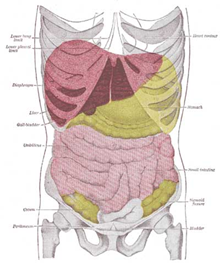
I am NOT having a transplant. A friend thought I should make that clear. But I am interested in this and, you know how sometimes everywhere you look, you see references to something you’d never noticed before? That’s happening to me now concerning transplants. And I want to get the word out!

In early November I went to an orientation for patients who may be receiving a liver transplant. I learned that:image

  • Liver transplants are the most involved and difficult of all transplant operations
  • The liver is responsible for over 300 functions in our bodies
  • Patients are often called in for a transplant, only to have to go home again because of problems regarding the donor liver
  • Sometimes the donor is kept alive when the brain is dead until recipients for all the available organs are found
  • Even someone my age has organs that are desirable for harvesting, which would then (more than likely) be transplanted into someone near the age of the donor
  • One has to be available to arrive at the transplant center within 6 hours of notice
  • Patients return for appointments twice weekly for three months while medications are tweaked, then less frequently, but always for life
  • Medications to suppress the immune system can cost thousands of dollars per month and will be continued for life
  • Patients are put through a full battery of testing to determine whether they are good candidates for transplant: heart function, kidney function, lung function, 26 vials of blood are taken for all the typing/testing that is done
  • After transplant, 50% of patients return to surgery because of a problem
  • With all that, transplant enables the patient to lead a better life, perhaps for as long as 10-20 years or more. On the news recently there was a woman who had received a heart transplant back in the 80s from a 12 year old boy. She’s still going strong! She was featured because she always chooses an angel from the Angel Tree every year to honor the donor of her heart.

Most states have a donor sign-up number and/or website. Please consider doing that. After my orientation, I signed up myself, something I’d been intending to do for years. There are WAY more sick people who need transplants than there are donors. I saw some really sick people who really need a transplant. I talked to a woman whose brother’s skin alone was used to help 15 people! On the donor sign-up site here in Texas, you can make a choice about which organs may be harvested, or you can check one box that allows all organs to be harvested. I chose “all” and told my kids they can cremate what’s left! Because organs need to be used quickly, states are members of regional groups—I think. That facilitates getting organs to various locations in a timely manner. There are other sites with transplant information, but that’s for another day. The American Liver Foundation is here. And, if you care about such things, a list can be found here of costs of various transplants and the number of patients waiting. This list happens to be in a story about Arizona and cuts in their Medicaid program, but, oh well….


Reading and the past week

image

This is what I have been reading lately. I found it very interesting because of the setting, South Africa. The culture of a country finding itself in a more integrated world and the language itself would make this a good read without the plot. There is even a glossary included in the back for all of us non Afrikaans speakers, to say nothing of the various tribal languages. For me, it was all engaging: the plot, the characters, and the culture. I had no idea that the racial intricacies were so important.

The past week has been very eventful and somewhat difficult (more about that later), so not much weaving and/or finish work has been done. The coming week should be somewhat better, although two days are already filled to capacity—one with fun and the other not. However, I did sit down at my loom on Saturday, and many inches were woven. The dyeing for this project was probably more fun than the weaving will be. The yarns will not be new to anyone by now, but I still like looking at them.Orange_to_purple

Labor Intensive

Sine WaveSine Wave, 34 in x 62 in

Recently I was asked by a friend to help with a presentation about weaving to an art group . The presentation was divided into two parts: the actual weaving part and the dyeing part. I was in charge of dyeing, and my friend did the weaving part. During and after the presentation, many people commented on how labor intensive the process is. Several stated that they wouldn’t have the patience. I don’t consider myself the most patient of people, but I guess I look upon the dyeing as kind of a scientific experiment. Why I use science as a descriptor, I don’t know, since science or math were never strong subjects for me. But on the topic of labor intensive, we weavers are always asked the perennial question is, “How long did (so and so) take?” I’ve started asking, “Which part? The dyeing, the planning, the weaving, or the finishing?” All of this came to mind after a comment by Meg on the Conan O’Brien video. How do YOU answer the how-long-does-it-take question?

Yarn, yarn, yarn

Orange_to_purple

No weaving, no tying on of warps, no finish work has been done this week. You know, they always say, expect the unexpected. My time has been spent elsewhere, but I did get the yarns balled up. They range from a 1/4 of 1% solution for the oranges on the right, to purples that combine violet and scarlet in varying degrees. I do have a small fantasy of tying on the warp tomorrow. I also, in my newly-minted proactive being, have ordered new Swedish cotton yarns from Lone Star Weaving Room. Julie was very helpful. Thanks, Julie!

Time, time, time

Square3So many ideas, so little time. This seems to be the phrase going on in my head right now. In the picture above, there’s not much interesting going on, although you can see the second piece below on the cloth beam. Here’s a reminder of what the third piece will look like when finished.Yellow

The plan:

  • finish up the weaving on the third piece of the commission series (shown above) by Thursday afternoon
  • re-tie the warp
  • start balling up that pile of color

So, the schedule will be something like this:

  • Friday afternoon: tie on warp, start balling up yarns
  • Saturday: finish balling yarns, plan out the gradation weaving
  • Monday-Friday: finish work and weaving the gradation pieces

A trip to buy thread will be necessary in there somewhere because these pieces will be hemmed.

That means that the commission pieces could be delivered by the end of next week! If, as they say, “God willing and the creek don’t rise.” I think that, besides the three commission pieces, I have four other pieces that need to be steamed and warp-finished (whether hemmed or needle weaved). Can you guess what is my least favorite part? Plus, I have all kinds of ideas roiling around in my head. Too many ideas, or no ideas at all can be a problem; both can lead to inaction. I may start the dye pots again, too, with the aim of getting shades of gray, navy, and various blues. I’m going to experiment with paler pastel shades of those colors. Still thinking about those clouds in the thunderstorm.

The Common Cold

image

imageMolecular surface of one variant of human

After days of thinking my allergies are really bad this year, I have decided that it’s not allergies but a cold. How can one get so confused? Well, my allergies really have been worse this year, the worst in many years. And, since I am doing a presentation to an art group about dyeing today, I started thinking about the possibility of common cold eradication. If it were even possible, would that be a good thing or a bad thing? Do we want to eliminate another species, even if it’s one that we don’t like? Would the elimination of all the viruses that cause the cold lead to other, worse viruses filling the void? Way too scientific for my little brain! All of this speculation did lead me to the Top Ten Incurable Diseases, though.

To get away from the cold and back to something even remotely related to weaving, here’s another “color wheel.” It is from Joel Wolfrom. You can find this and a lesson to go with it here. I’m not a quilter, but I bought one of her books many moons ago and love it. Unfortunately, I don’t know where it is. Maybe when I finish organizing my shelves? I’m trying to restore order a little bit at a time, scheduling time every afternoon to work on the organization problem. But, for now, I am heading to the studio.

image

Fiery Pool:The Maya and the Mythic Sea

Note: Since this was written, many of the links for the images no longer functioned, so I have removed the images and added links to sites where they can be seen.

We went to the Kimbell Friday to see the Maya exhibit. It is probably the best Maya exhibit I have ever seen, and I’ve seen a few! There were many items of interest. I included the Crocodile Effigy (scroll down to see an image on this site) below because I always love the primitive quality of animals in pre-Columbian art and because of the coloring. You can read about that below:

A symbol of the primordial world, this crocodile is scored to evoke the terrestrial surface cultivated by the ancient Maya. Serving as both a whistle and a rattle, the creature is painted with a stable pigment of indigo and clay known as Maya Blue. It is thought to have sacred associations.

Crocodile effigy, AD 700–800, Jaina Island, Mexico. Ceramic, 2 x 3 3/8 x 7 3/8 in. (5.1 x 8.5 x 18.7 cm). The Metropolitan Museum of Art, New York, The Michael C. Rockefeller Memorial Collection, Bequest of Nelson A. Rockefeller, 1979. Photograph © The Metropolitan Museum of Art

I love the elegance of the pelican below. And can you believe it’s from stucco?

This architectural ornament comes from Comalcalco, an ancient city near the swampy coast of the Gulf of Mexico where pelicans have long thrived. The naturalistic sculpture features an accurately rendered round head, narrow bill, and featherless throat pouch. The ancient Maya would certainly have noticed the pelican, the largest and arguably strangest-looking bird residing near the sea. This imposing sculpture most likely came from the elevated palace at the site, the “Great Acropolis,” and formed part of a watery tableau.

The jade sculpture below is the national treasure of Belize. It is carved from a very fine jade. In person it almost appears pearlized.

The Maya revered both objects obtained from the sea and materials transported over the sea, such as jade. Jade arrived in Maya centers via the sea and bore associations with that sacred domain. This head, the largest work of art in jade from the Maya world, depicts a deity with characteristics of the Sun God. It is made from stone quarried in the Motagua River Valley in western Guatemala and was probably transported north by canoe. The polished green surface of this sculpture suggests the blue-green waters of the Caribbean.

Part of the afternoon was spent in a workshop called Jade: More Precious than Gold. Here is a description of the workshop:

Discover the historic significance of Maya ritual garb adorned with symbolic materials. Rare and beautifully crafted artworks in the current exhibition will inspire wearable art fashioned with faux jade and turquoise.

I look forward to the next workshop with block printing and glyphs. And, if you’re interested, you can play the glyph game here (no longer available).

Since the focus of this exhibit is the influence of water on the Maya, I learned several ways that symbols depict water. They may end up being designs in the future!