Artist statements

Heist While weaving and taking care of my floppy warp, I’ve been listening to The Heist by Daniel Silva.  There’s a lot of art in this book, kind of spy novel, art novel, heist novel. The main character is an art restorer of really old art, when he’s not a spy. Pretty interesting overall. After reading Silva’s bio, I realize that I’ve never read on of his books before, and I’m late to the game as far as the main character is concerned. He has been in Silva’s last nine books.

For the last couple of weeks I have been thinking about artist statements, you know, that gobbledygook group of words that seem to be a requirement for artists. How can one make those words more interesting? What can those words be that would engage someone in the art, not the words? Have you ever read an artist statement that really “spoke” to you? How did it speak to you? Got your attention?

Butterflies everywhere

butterflies Butterflies everywhere. I’m afraid to time how long it takes me to weave one inch. Maybe I’ll get brave today and do that, between all the appointments. I’ve also not timed how long it takes to perform all the physical therapy exercises that I’m doing. No matter, they’re helping. I can raise the harnesses and weave in those butterflies. That’s all that matters.

Last Friday was the opening of

ZigZag, tapestry, hand-dyed wool and mohair on cotton warp 62 x 29 inches ©Sherri Coffey all rights reserved

ZigZag, tapestry, hand-dyed wool and mohair on cotton warp 62 x 29 inches ©Sherri Coffey all rights reserved

the Texas Artists Coalition exhibit. I wish I had taken pictures, but I didn’t. Maybe I’ll go again and take a few. There were also other exhibits that I’d like to see. These are the pieces selected by the juror.

Door, tapestry, hand-dyed wool on cotton warp 50 x 28 inches ©Sherri Coffey all rights reserved

Door, tapestry, hand-dyed wool on cotton warp 50 x 28 inches ©Sherri Coffey all rights reserved

Linen warp problem…solution?

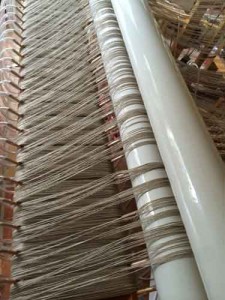
Taken directly facing the loom

Taken directly facing the loom

Same set-up from different angle.

Same set-up from different angle.


Yep, this is my first time using linen as warp. And yes, this is embarrassing to relate, but … What I thought was my perfectly tensioned–okay, not perfectly, but good–warp is not so much. I consistently had some loose warps, which is a problem when that warp in the interlock warp. First I tried hanging weights from the offending warps. Didn’t work so well. Then I had the brilliant idea of raising those warps and inserting a stick. Better, but they moved when I advanced the warp. Duh!

Several sticks, pulled down closer to the warp beam. So far, so good.

( Several sticks, pulled down closer to the warp beam. So far, so good.

They worked best when the sticks rested on the beam above the warp beam. More sticks, new location. Works! By the way, I am the full 60 inches of the warp width. All the ends are through the heddles and reed, but the extra width hangs in front when it’s not being used. When I finish a piece, I cut off the extra part also and use that to measure how much of the warp I’ve used.

(Each peg of the sectional warp beam has tubing over it in the hope that warps won’t get tangled or caught on the pegs. Only works sometimes.)

And the winner is … and grayscale again

253g The first ball of yarn on the new Nancy’s Knit Knack’s ball winder. I love it! No grinding of plastic gears. This skein was 253 g and wound on easily. You can also get a motor for the winder, which I had rejected because of my tangled hand-dyed skeins. I’ll try a few more skeins on this hard worker and possibly reconsider that decision.

The piece that I’m currently working on is made up of green and blue yarns. Below are small pictures of the work, first in color, then black and white. I think it’s interesting that the 4% blue square is still visible in black and white, but the 2% blue is not. Which only means that the value (or tone) of the two colors is very close to the same of is the same. I admit that, not being an art major, I don’t know a lot about this, but there are resources online. Here’s one that I thought was good.  There is a previous post about value and some tools to use, but I think Photoshop wins overall.

Green-blue-squares

Two shades of blue, green background. 2% blue on right. Combination of 2% blue and 1% blue on left.

Green-blue-squares-Black

Two shades of blue, green background-black and white. The first section of blue disappears.


Preview


Blue-4-percent

4% blue on green background

Blue-4-percent-black

4% blue on green background-black and white


In the fiber world

It seems that lately I’ve seen some interesting and beautiful objects of fiber. One is a woven shelter by Abeer Seikaly. On his website there are many pictures of the shelter from the outside and inside, in the desert and in the snow. There are also diagrams showing the structure. The diagrams remind me of those honeycomb tissue paper decorations of snowballs. I want one in my yard!

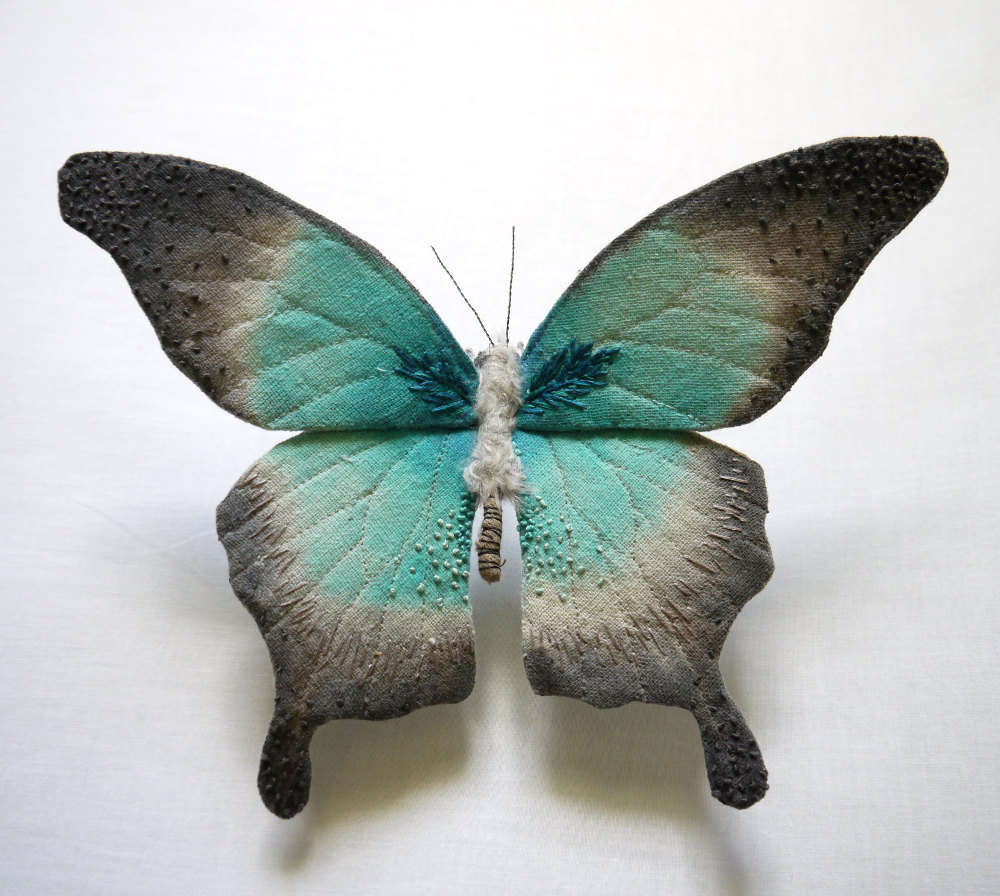
The wonderful fiber insects by Yumi Okita are beautiful! The one pictured on the left has the materials in the caption–hand painted fabric. Look how those colors blend into the next. The link above takes you to an Etsy store that’s on vacation, but that’s the only link I could find for her. Perhaps it’s closed because everything has been sold Here’s her sold page. By the way, love the logo for her store! I want one of these too! Other places to see her creations are here, and here.

Erin Riley‘s tapestry process and time required for one piece of art are featured in this interview.  Her landscapes not the usual tapestry subjects, but feature vehicles, highways and accidents. The piece Three Strikes is compelling for me, but I’m not sure why. Maybe it’s the anonymity of the characters, or perhaps it’s just the unusual subject matter. What do you think?

All of these works can be seen larger by going to the artists’ links. Take a look. You’ll be glad you did.


Ball winders

Progress was made on the current piece, but then a small disaster struck. My knee, which had been getting better, decided it didn’t want to do that. The earliest I could get an appointment with an orthopedist was next week. Back to the chair and ice packs. Weaving stopped, which brings me to ball winders.

I have had the same plastic ball winder since I first started to weave. It works, but my current weaving involves skeins that are about 1/2 pound each and hand-dyed. No matter what I do, they are more tangled than “store bought” skeins. That plastic ball winder works really hard and the plastic gears click and grind. I’ve been trying to decide on a new ball winder, and indecision means that no new ball winder comes to my door. I tried out the Strauch from Mohair and More during Fiber Fest. I like how sturdy it is, especially compared to the plastic ones, but wasn’t crazy about the orientation of the handle. So I did nothing with my decision-making. But now, because I am winding bunches of big skeins, the issue raised its ugly head again. Research again. Looked at comments on Ravelry and Weavolution. Fricke was mentioned (I had forgotten about them). And I took the plunge, jumped in with both feet. Nancy’s Knit Knacks to the rescue, or at least I hope so. It’s on its way! There is the option to put a motor on this gal, but with my tangled yarns? We’ll see.

Let’s weigh in on our favorite tools. Ball winders? Skein winders? Swifts?

Organized chaos


From Hokett Would Work

Lease stick holders from Hokett Would Work

This is how things looked after getting the warp on the beam and before tying to old warp.

This is how things looked after getting the warp on the beam and before tying to old warp.

I’m sure others can do this whole warping and tying on to an old warp in a much neater way. Maybe I’ll be able to do it also after another few dozen efforts, because I learn something NOT to do every time.

Before all the tying of warp ends, here’s what it looked like. A little less chaotic. The lease sticks had been inserted into the old warp and placed into the lease stick holders. Then the whole business of tying individual ends.


WarpChaos

After all the ends are tied–total chaos!

LinenWarp

The linen is being used double and the old warp is single.

The tah dah moment after all the knots have passed through the heddles and reed. Doesn’t a warp look good on the warp beam coming over the back beam?

On and my careful calculations as for as warp needs? Wrong! But the error has been corrected for the future. My spreadsheet:  Spreadsheet So what did I learn this time?

 Tying old warp to new 

  • Insert lease sticks while old warp is attached to apron rod and under tension
  • Masking tape to hold ends down on lease sticks
  • Use lease stick holders http://wouldworkifhewantedto.wordpress.com/2013/04/06/lease-stick-holders/
  • Cut old warp in front of reed, knot in groups of 8
  • Wind warp using warping wheel
  • Wind extra end for each selvedge
  • Trim ends of warp before taping ends to warp in section
  • Tie each new end to old end

Had to add one last thing. Linen is very slippery. I had been told that but didn’t really consider it. This is the first warp that I’ve had that will just slip out of the heddles as you work on one of its neighbors!

Ice, work, ice, work, repeat as needed

Ice-pack

That’s frost on the ice pack.

Yep, it’s been a fun week! Somehow I injured my knee and could hardly walk–seriously, not an exaggeration. So, after looking up whether to use ice or heat, I sat with an ice pack on my knee. After 30 minutes of that, I was able to work for a bit. Then it was back to the chair and the ice.

But, I still got some stuff done. Lots of dyeing, Yarns and the linen warp is on the back beam. Tomorrow I will start tying it on the old warp. This is the first time I’ve put on a long warp (18 yards) of linen. That’s a fiber that really has a mind of its own! I also discovered that my careful calculations were for naught. I thought a warp of this length would take more tubes of linen, but Linen only used about half of that. Back to the drawing board/spreadsheet.

I also got a surprise on my doorstep with a book delivery. This is the third book I’ve won in the last year. Weird. This is the latest by Taylor Stevens, called The Catch. I first read one of her books when I picked Book2 up The Informationist from the library. not really expecting much. Wow! I couldn’t put it down until I finished the book. Now, whether that’s a real testament to the book or the mood I was in… who knows?

One of the other Book books is The Signature of All Things by Elizabeth Gilbert. Now that one is a long one, but I enjoyed it and found it very interesting because of the subject matter.


Bellows camera

You’ve seen pictures made from a bellows camera, especially here in the US. They were used during the Civil War to record history and people. I’m currently listening to an audiobook in which one of the main characters is an artist photographer. She uses a bellows camera for her work, after buying it on a whim at an auction. She then had to learn how to use it, so studied with another photographer to master the camera. Her process with this camera involves coating a piece of glass with colloidal silver, taking the picture, leaving herself enough time to get to her darkroom before everything dries. Frankly, the story is not very good, but I will finish it because of the artist character and her way of looking at the world as an artist.

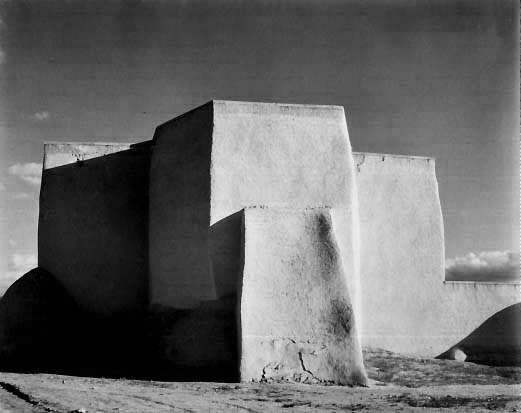
In doing a little research, a bellows camera can take other formats, but this artist uses glass with silver to produce her photographs. This is the same method that Ansel Adams and other well-known photographers used. The Amon Carter Museum of American Art has an extensive collection of photographs, including some by Adams. The museum has also produced a pamphlet about the different kinds of photograph-making over time. We live in an amazing world! From the museum’s website, you can search the digitized collection and find lots of information. I typed in the word silver, and got this list. I love Laura Gilpin‘s photographs, but didn’t realize that she, too, used gelatin silver for her pictures. Do a search for Gilpin and see what comes up.

Note on the photographs here: According to Library of Congress and Wikipedia, these photos are now in the public domain. If this information is incorrect, I hope someone will correct me. The Library of Congress also has a whole section called Civil War Glass Negatives and Related Prints. Like I said, an amazing time. I just heard recently that all homesteading records for each state are being digitized.


Natural dyeing

Dye sheet

Notes on dyeing with madder and osage.

I spent way too much time on Saturday searching for plants and/or seeds for natural dyeing. Long ago I bought madder plants from Richter Seeds in Canada. The madder plants did very well until the drought. Richter’s no long has madder plants or seeds, and evidently no one has plants. Looks as though I’ll have to start some from seeds myself. I’ve grown weld from seed relatively easily, but the leaves of the weld plant are used for dyeing. With madder, the roots are used, and it takes several years for them to get to a good size to harvest. So, is it worth it to grow them from seed?

I’ve also wanted to grow indigo, another plant to start from seed. I ran across a Donna Hardy’s blog about growing indigo in South Carolina, where there was an indigo industry a century ago. Until I read the blog, I had no idea that indigo could get so tall–9-10 feet! Botanical Colors is hosting a 3-day indigo retreat in Charleston, South Carolina. Check it out here. Donna is a part of the retreat. Botanical Colors has some interesting topics in their blog also.

Something I ran across while trying to find dye plants and seeds is this article from the NYTimes. Check it out. It includes many pictures with the article.