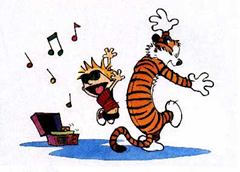
New Vocabulary

While listening to The Girl Who Kicked the Hornet’s Nest by Stieg  Larsson, I heard a new word—new to me at least. Gynocracy. In describing various myths (or information) about what is called the Amazon warrior women, this word was used. No dictionary is necessary to discern meaning, but I was curious about when this word has been used in the English language. Not many references, but here’s one.  And the Amazons are discussed here. Interesting that this came up on the same day that there was a piece on the Today Show about Timbuktu, in which it was stated that the men, not women, keep their faces covered in this matrilineal society, even though it’s a Muslim society. Very interesting.

In reference to nothing whatsoever, I liked the painting below, probably because it’s so simple and something similar could be done with weaving. And, oh yes, the color. While a friend and I were going through my hand-dyed yarns, we noticed that red and all its many forms predominates. Hmm….Do I even want to know what that indicates????imageClyfford Still, 1955-d, Ph-387, 1955. Oil on canvas, 117 1/2 x 111 inches (298.4 x 281.9 cm). Photo: Courtesy Gagosian Gallery.
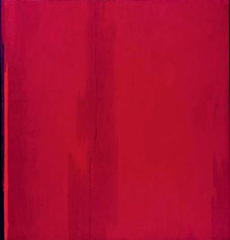
More about the exhibition can be seen here.

Dyeing and weaving, weaving and dyeing

Violet to scarlet

I’ve always said, that in an ideal world, the dyeing for the next project would be happening as the current project is being woven. Wow! That’s exactly what’s happening right now! I actually can’t believe it myself. Above are part of the series of gradations that I’m working on. they go from violet to scarlet. Then the next batch will go from scarlet to orange. With the orange, I am going to experiment with dyeing in lighter shades. Usually a dye formula is based on 1% of weight of goods, so these will have dyeing at 3/4 and 1/2 of that amount. They may turn out totally ugly, but they can always be overdyed.

I’ve also done something totally sacrilegious. Usually I soak the yarns in detergent, spin them out in the washer, and throw them in the dyepot. I am dyeing the current batch by throwing them in dry! So far, they look good. I am taking care to heat the yarns VERY slowly, using a timer to check on the every 30 minutes. These yarns are singles and not what I usually use, so they are kind of kinky in their natural state. They will weave up just fine, though.

Here’s the current project on the loom.

Green square in progress

I’m having fun weaving this because the colors are so engaging. Plus, I’m still listening to the Larsson book, The Girl Who Kicked the Hornet’s Nest. It’s also very engaging. My only complaint is that my non-Swedish-speaking brain has trouble keeping up with all the characters. Their names seem very similar sometimes.


Award winners of Craft Texas 2010

image

Read all the information here and see a better picture than this one. As you can see, the workmanship is excellent. I wrote about  Ms. Rayroud and her paper-cut pieces before, but I am glad to see again the actual piece that is in the exhibit.

CraftTexas 2010
September 25 – December 30, 2010

Congratulations to CraftTexas 2010 Award of Merit Winners Clark Kellogg (current artist-in-residence) for his meditative Garden Bench; Gary Schott for his interactive metal piece, Eskimo Kisser #3; and Catherine Winkler Rayroud for her intricate paper-cut piece, Mama Never Told Me.

CraftTexas 2010 is the sixth in a series of juried exhibitions showcasing the best in Texas-made contemporary craft. This year, 73 works made from clay, fiber, glass, metal, wood or found/recycled materials were selected from a pool of over 460 submissions. Works range in style from traditional to cutting-edge contemporary and were judged on criteria such as technical proficiency, creative and inventive use of medium and innovation in style or concept.
While CraftTexas 2010 features outstanding works in all of the craft media, the exhibition is particularly strong in conceptual jewelry created from innovative and alternative materials. A few of the themes running throughout the exhibition are material re-use and nature, as well as social and political issues. Juror Paula Owen said, “As most of the work submitted for Craft Texas 2010 was both beautiful and provocative, I expect an extraordinary exhibition—one that engages the mind and the senses to the fullest!”
CraftTexas 2010 was juried by Gail M. Brown, independent curator of contemporary craft from Philadelphia, PA; Cindy Hickok, internationally acclaimed fiber artist from Houston, TX; and Paula Owen, president of the Southwest School of Arts and Crafts in San Antonio, TX, and a practicing artist.

All Squared Up!

Squares_blk_blue

Since I need to have something going on the loom when the photographer came, I decided to do these quick down and dirty pieces, shown here before finish work. I’d already been working on designs for a commission, so used two of those possibilities and yarns already on hand to weave. After doing the first one, I continued on with its counterpart while the commission yarns were being dyed. This also gave me an estimate of the time needed to weave three similar pieces. Below is roughly the idea of the three pieces. The yellow one will be woven last while I make some adjustments to the design. The small lime square will become something else. The greens will be the same greens as are in the green piece, so the greens shown in the yellow piece are off. I think my favorite is the middle one. For my discussion with the customer, I took my little paper cutouts of the designs, a piece of green fabric the same color as the wall where they will hang, and all of the dyed yarns so that we could really check colors. The green one is in progress right now.

YellowsUntitled-6 with rectangle

Bottle Trees

Not a thing about weaving here, unless you’re inspired by color or graphics shown. My mind wanders while weaving, so I keep a notepad to write down things I want to remember later. That way there is no need to leave the loom to take care of whatever crossed over into consciousness; I can do it later from my notes. This post is about one of those “monkey brain” thoughts: bottle trees.

A few posts ago I mentioned a book that I had read, On Folly Beach by Karen White. The setting was in the outer banks of South Carolina and bottle trees played an important to the story. I have heard of bottle trees, and as a child, I may even have seen one or two, but I decided to do a little research—isn’t the internet wonderful? The pictures below came from this site. You can also find some history and many more pictures of bottle trees if you go there. Many are quite beautiful.imageBelow: Greg Grant’s garden, near Timpson, Texasimage

Below: Jenks Farmer, near Florence South Carolina.

I especially like this one, which is made from old telephone pole transformer things (or maybe it’s electric poles), or whatever they’re called. Love the lines in this piece.image

Huntsville: A Gated Community

T-shirt Between Fort Worth and Houston lies the town of Huntsville, the headquarters for the prison system in Texas. We decided to stop in Huntsville for a walk around the square, reading historical markers (it seems that Sam Houston spent a lot of time there), a drive by the Walls unit, and then on to the prison museum.

The prison system of Texas was set up only three years after gaining statehood and the Walls unit (as it is called) was opened in 1849, just four years after statehood. Amazingly, it is located near downtown Huntsville. It currently does not serve as a regular prison but as the location where all of the executions for which Texas is famous take place. It is also where prisoners who are scheduled for release go before processing out.

For me, the best part of the Prison Museum is the tee shirt at the top of this post. Even though I usually really like history museums, I didn’t enjoy this one too much—maybe the theme? Included in the exhibits were famous prisoners, weapons made by inmates, a whole kiosk about putting an inmate to death, and a picture wall of murder victims. Frankly, I didn’t even look at the all exhibits. I certainly have no desire to find out more about how an execution is carried out. If nothing else, seeing this museum, and the accompanying video, makes me want to lead an exemplary life. Prison would be a grim existence. The lack of privacy all by itself would do me in without the noisy wake up call and breakfast at 4:30!

Below are some pictures from the visit. I’m loving the new camera!Cell

A typical cell. Visitors can go inside and have their pictures taken.


Rodeo

A prison rodeo used to be held yearly for the month of October. I think it stopped in 1968.

“Old Sparky” was made by inmates.OldSparky

Creativity is where you look

I love the graphics here. I would never have thought of tires when I first looked at this picture.“The tire sculptures, prettified with white paint on their tread patterns, making them look like gorgeous folk-art totems, are piled with candy that visitors can grab in handfuls. ‘They can think about getting fat’ as they munch from candy bowls made essentially of industrial waste, Mr. Pruitt said.”

And, while depicting creativity with ordinary objects, what about this piece using saws. You can see it larger on artdaily.org.

image Above, from left: Emily Black, Baskets Don’t Kill People; Guns Kill People.  Mixed media, 10” x 6” x 1”.  Photo by Lakewood Photography. Leslie Lewis, Arachne.  Wood, fur, powder-coated brass.  12” x 14.5” x 12.5”.  Photo by Rob Glover.  Robly Glover, Bobber Necklace 3.  Mixed media.  24” x 24” x 3.5”.  Photo by Robly A. Glover.

The above is the postcard for the CraftTexas 2010 exhibit. I included it here because of the pieces depicted. The middle piece is a necklace made of bobbers, the fishing kind I assume. When I look at the pieces featured on the postcard, I am amazed that two of my pieces were accepted into the show! Below are the pieces that were accepted. If you’re going to be in Houston, the exhibit will be on display until January, I think. The opening is Friday night.

Purple Haze of a Setting Sun

Ancient Symbols

Weaving: What’s on the loom

Blue_square_cinnamon_turq_b

I have been spending many hours at the loom, trying to finish a couple of pieces while the yarns are being dyed. When I spend too many hours weaving, I begin to want a standing loom. But if I had a standing loom, I’d probably want a sitting loom! I’m really enjoying the colors in this piece, which is somewhat surprising. My usual go-to colors are reds, purples…. The brown here is especially rich, with the idiosyncrasies of hand-dyed yarn. I’ll check later, but I think the dye formula has red, yellow, and turquoise.

In my new-found maturity—hehe :>), my reading habits have changed. I no longer read a book to its bitter end when I don’t like the book. That used to never happen. I recently picked up My Lost Daughter by Rosenberg. I’ve decided that I don’t like the characters and will return it to the library unread. On the other had, I also got On Folly Beach by Karen White. Now I’m not saying this is great literature, but the characters were appealing and reading about the history involved in the plot was interesting. Some of the plot was a little implausible, like the love notes being written in the margins of books, but overall it was a good read. When I looked this one up, I found that there are many books written about Folly Beach. Maybe I’ll have to read others just out of curiosity.

Practicing

wineBox While waiting to get the dyeing done and starting the next weaving project, I am going to practice a couple of methods for achieving a certain blending of colors. I’ve written about this particular wine box before. It is thumbtacked to the wall, so I see it every day. I plan to try a few techniques to see what method might work best for getting that blend of colors when the two color sections overlap. I like the almost watercolor-like look in this picture, so some practice is needed and have no idea how to achieve that look or if it can be done with tapestry. Then I’ll work on the next piece in similar colors to the last one. After that, the yarns should be finished, and work can begin on the commission.

Michael Nagle for The New York Times 

This mysterious trail of paint on Avenue B along Tompkins Square Park in the East Village is part of an eight-mile-long graffiti tag by an artist called Momo.

I was looking on the NYTimes Art/Design page, and noticed the above picture. I was instantly reminded of the Gugger Petter tapestries, which you can see here, but the one that I was thinking about is not pictured.

Feeling good

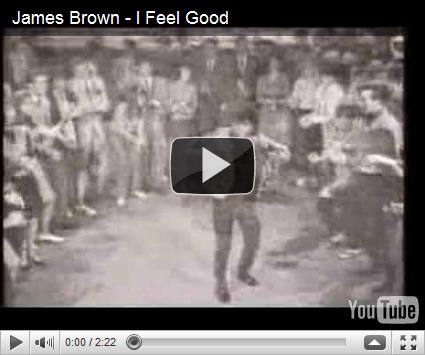
imageYou know how we don’t always appreciate what we have? I am appreciating feeling good right now. It is so nice to have energy again. I was doing the happy dance all day yesterday as I dyed yarns and wove. Reminds me of that old song by James Brown, I Feel Good. The really old video below is not very good in quality, but it makes up for it in exuberance. When I looked this up on YouTube, I found that there many, including one on the Ed Sullivan show and one performing with Robert Plant. But notice the dancing in this one.
<\/param><\/embed><\/object><\/div>“;” alt=”” />

So, while not dancing around, I made trips to check on the dyepots. Here are the results, taken with my new camera. The color seems to be better with this camera.Yarns_greens_red_blue