Category Archives: Uncategorized

The good, the bad, the ugly—or everything has to be finished eventually

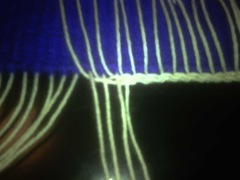
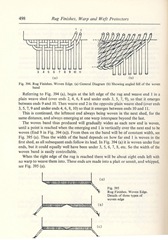
Whining Alert!—Every job has its good points and the not-so-good points. My not-so-good is finishing. I have spent most of the day only almost finishing two pieces. This is back breaking work! Well, at least painful in my middle back from bending over the table. To finish (currently), I am preparing the warp for needle weaving into the web of the fabric by doing a woven edge, as shown here in Collingwood’s book on rug weaving. In this illustration many warp ends are being woven; I only use five warp ends, weaving over/under, then picking up a new warp thread, and repeating. This process leaves the warp ends facing up, so they then be can needle woven into the fabric, as shown in the middle picture.Woven-EdgeFinishingThis picture shows the warp ends already woven into the fabric, ready to be clipped off.Finishing2 I find this process terribly boring, so I am really grateful for audio books. I have also occupied myself with numbers. Today I have learned that it takes two minutes per inch for the needle weaving and approximately the same length of time for completing the woven warp edge. I know—pretty compulsive, huh? At least it gives me a method of estimating the time required for doing the finish work. After all the warp methods are complete, each piece will need intensive steaming. I can’t decide whether it’s better to do all of this in a marathon session or as they are taken off the loom. What I’d really like to do is find someone who would be willing to work 2-3 days a month doing some of this finish work. Don’t even know where to start finding that someone though.
Okay, no more whining!

Each of these pieces will be hung from a board with Velcro attached. I knew that I only had one board left, so was planning on making a trip to Lowe’s. Lucky me! A coupon arrived on Saturday which gave me 20% off. I bought boards, sandpaper, spray paint, and more Velcro. That little trip to town was the only time I got away from the finish work today. Except for the delivery from UPS. Evidently those poly bags are really heavy—the tell was the way he was walking while carrying the box. He very nicely offered to bring all the boxes inside, and I very nicely let him. Progress!
Neanderthals (and, no, they weren’t weaving)

 Credit: NY Times

I read about this in my morning paper over coffee one morning. If you haven’t heard/read about the link between Neanderthals and modern man, here’s the NY Times article. When I read or hear about some historical piece of knowledge, I am reminded again of how much I don’t know, especially in the area of history. And, I’m such a visual person, I think looking at a time line of man’s history is helpful. Something else to start researching in my spare time.

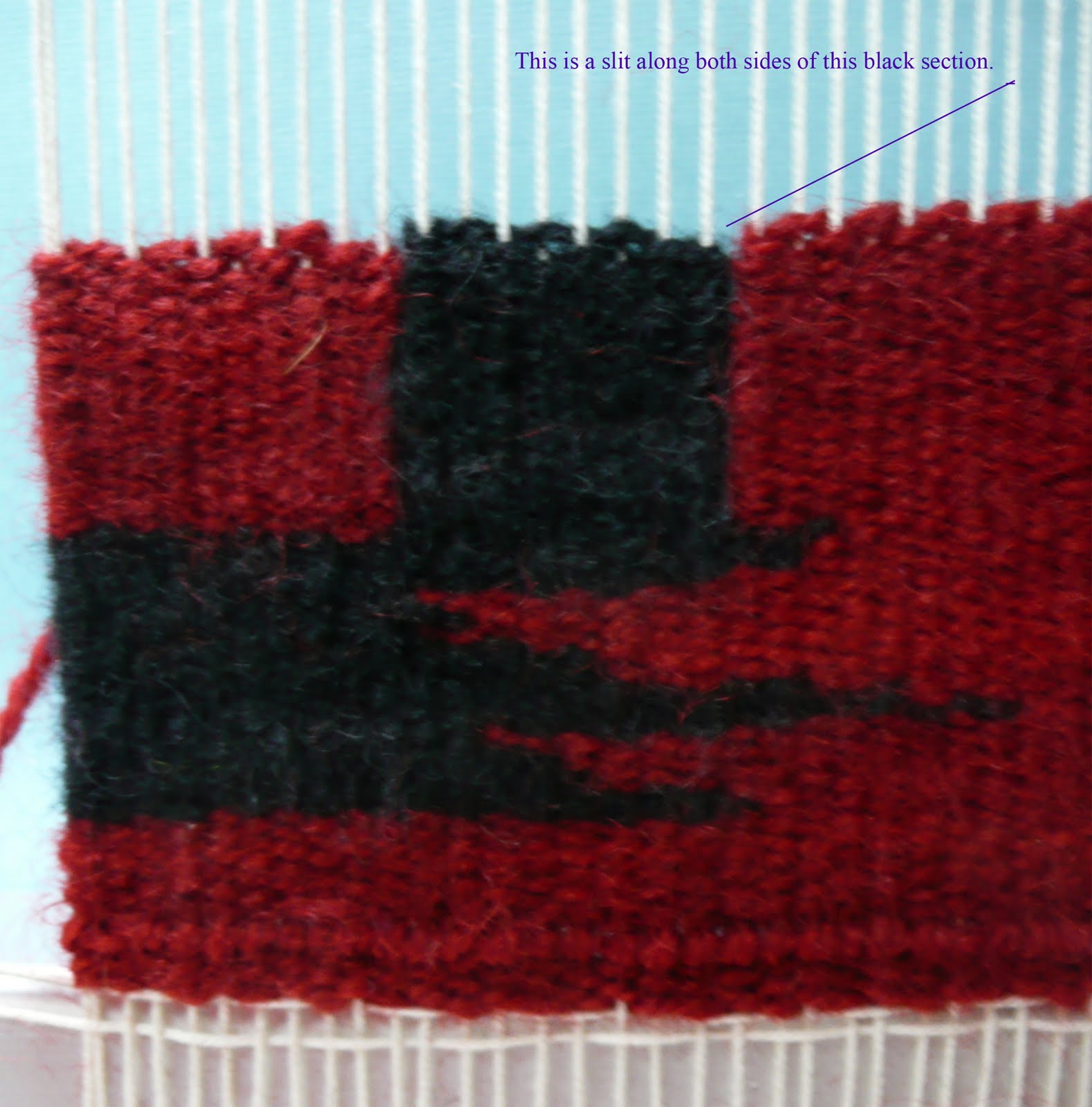
Mirrix Adventures-Today I started weaving a rectangular shape out of the black that is in the beginning part of my Mirrix tapestry, with red on each side. Since I want to manipulate this black part in some way, I am weaving it in slit tapestry. Gotta tell you—This is the best slit I have ever done! I’m lovin’ this loom!

  • I’ve developed a rhythm now
  • On advice from J Austin, I’ve put a colored cardstock between the front and back warps
  • I have a tendency to grab the lower warp bar when changing sheds, so have trained myself to steer clear of the warping rod

For those of you who have been wanting a small portable loom, this one is the best, and I have tried several! You’ve got a stand built in, so you can use it in a hotel room on whatever surface is provided. You can move the stand legs out of the way, and weave in the car—as a passenger, of course! Although, how much worse can weavers be than all those text-ers driving down the highway!

Synesthesia and this and that

http://www.studio360.org/episodes/2008/02/01

A couple of weeks ago I was listening to Studio 360 on the radio as I did errands. I was really fascinated by this topic of synesthesia. Unfortunately, there is no summary of the program, only the audio, which is above. If you don’t know what synesthesia is, I didn’t either, at least by that name. Some people’s brains see letters and numbers, not in black and white as do most of us, but in color. I can see how that could be a problem for those folks, but also a huge boon. Think of the artistic possibilities. They’ve done brain scans on people who have this ability and watched certain portions of the brain “light up” in a way that most of our brains do not. If you have time, I recommend listening to the audio of this program.

I had been thinking about the surface design workshop and combining that idea with my work. We used polyester fabric and disperse dyes painted on paper, then ironed onto the fabric. I don’t have much of a desire to work with polyester yarn, but was considering doing something on the Mirrix with that idea in mind. Well, I’ve decided on a different route to surface design. I am going to use my regular materials and learn how to apply my regular dyes and/or pigments to my wool pieces. The size of whatever I weave on the Mirrix will fit perfectly into the scope of this project. I will use resists and stencils to experiment with a couple of pieces.

In the meantime, I have to do needle weaving on three pieces, covers and labels for five pieces, and get them shipped before May 24! And there’s still the jungle outside my door. But, Taos Magazine arrived in the mail yesterday. Below is page one of a very important article. Heh, heh… I tried to find it online and couldn’t. If anyone is interested, I did scan the other pages. All of the pictures are great!

TaosMagazine1

Great packaging and Day Two

image

Isn’t this great packaging! And it’s art related. Credit is here.

image

Mirrix Day 2—I really haven’t had much time today to work with the new loom, but it’s really quite nice to use. I’m working on getting a rhythm going. Plus, I need to work in a situation where I can see the warp threads better. I did put a paper behind the second section of warp threads to help make the front ones more visible.

In the picture below, I tucked the weft threads behind so that the actual pattern is visible. It’s also hard to take a picture. This not trapezoidal, only the angle of the camera!Day2

Tomorrow I will start making an object like a square or something. If I can find it, Kathe Todd-Hooker’s book, Line in Tapestry, would be fun to play with for a while. On the other hand, I’m really anxious to get started on something “real” and not just a sampler. This is amazing to me—I feel uncomfortable not having a plan. One of the reasons I enjoyed the surface design class so much is that was very freeing. We were like kids. Many years ago I took a felting class. The instructor wanted us to make a plan before we got started. I really didn’t want to do that, and felt that complete childlike freedom while I worked with the felt. Yet, while weaving tapestry, that freedom escapes me. Should I work on that and try to be free or go back to sketching what I’m going to weave? Is there a place in between total freedom and sketching out a plan?

On another note, it may be time to make the public to-do list again. I can feel myself getting more and more behind. The house stuff is calling, the four off-the-loom pieces are calling to be finished, the piece on the big loom is calling, the grass in the yard is calling…never ending!

What to do in my spare time and Mirrix adventures

image

So, okay, I made that little trip to Joann’s to look for polyester yarn. Seems that it’s all acrylic, which might work, but I wasn’t sure. While there, I decided to look for a hat pattern and found the above, #7600. I’m thinking that maybe I will use those fabric pieces that I made in the workshop for a big sun hat. Something to do in my spare time, right? Then, while still in this mode of looking for things to do with this disperse dye printing process, I looked at Wal-Mart for clothing to use for this process. I’d really like to do a bra, but I’m not willing to spend much on such a grand experiment. Maybe a pair of panties? $3 is my limit!

Mirrix Adventures-Heddles are on—I found them in the trash! Can you believe that! I picked up what I thought were scraps of yarn and threw them out. Had to make a few corrections with heddles being on wrong warps. Then my shed was minute, so pulled out the directions and realized that the shedding device handle was attached incorrectly. Fixed that, then realized that I would have to exert just a little more pressure to get a good shed—i was afraid of breaking something. Now we’re cooking! There’s a good shed, the yarn is packing in. The only thing that I wish was different is my double selvedges. They both ended “up” at the same time. This is a nice sturdy loom, just the right weight to work with. I think I’m going to love it just like all those other Mirrix owners do. I am now ready for my Mirrix adventure! After this warp, I plan to get that wide one on with the help of masking tape on the warp bar from the get-go.

  • What I’ve learned so far:
  • Mark with a Sharpie every other warp thread
  • Make sure one selvedge goes up and one down with each shed
  • Don’t work on a brand new project when tired! (I tell myself this over and over—has it worked?)

Lessons in frustration

image

This is a picture from the Mirrix website

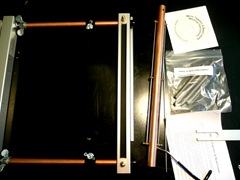
loom-unpackedMonday-Let me say here and now that this is not the problem of the loom. I have heard about the Mirrix loom for ages, and know that everyone loves their loom. This is a problem with my brain. Since my new Mirrix has a weaving width of 13 inches, I thought I’d make a warp of 13 inches. Makes since, right? But I am having trouble with this concept of a continuous warp of the kind that is used on a frame loom. I use a horizontal loom, put on 30-40 yards of warp at a time with a sectional beam. I don’t warp constantly.

Watching the DVD that comes with the Mirrix, pausing constantly to make sure I’m understanding the direction the warp has to go, I start warping. Then I went back to the written instructions, trying to make sure if I’m supposed to go behind or in front of a beam. I thought I was getting it, then the warp bar fell out. With that, I decided that a 4- inch warp will be wide enough for practice. I know, it’s not rocket science and soon it will be second nature. Just not today. 

Later on Monday– The four-inch warp is on. The warp bar kept falling out, so I resorted to masking tape. Masking-tapeWorked great! I’ve measured the threads for the heddles, tied a few heddles and attached them to the heddle bars. Now I’m really wondering about what kind of shed I should expect. I am not going to worry about that right now, though.

Here you can see the loom with the warp. In addition you get to see all the surrounding notes, instructions, the small DVD player, and a finished piece in the background.

WithNarrow-warp

The lesson that I don’t seem to learn from days (or hours)like this is that sometimes it’s best to just walk away, get some rest, and start fresh at another time!

Does anyone know of a source for polyester yarn suitable for weaving? Nothing really fine. I though I’d weave a small piece on this loom and do some surface stuff to it. I never use anything but natural fibers, so my sources are limited. Maybe a trip to the yarn department of Joann’s is in order.

I Won!

image

I am so excited! I have been notified by Elena at Mirrix Looms that I am one of the winners in their Social Media Marketing experiment.  I wrote about the contest here. I really am very excited to be able to do this! So, first, I am going to make a list of the possible projects to do on this loom. It will be my first real effort at using an upright loom, so I imagine that just warping this puppy will come with a learning curve. Just deciding on the warp sett will be important—this coming from someone who uses a sett of 4 epi! One of the positives, besides having an opportunity to use this loom that I’ve heard so much about, is that there is a commitment attached. That means I have a great incentive to try new things and experiment.

I am including this list to help me remember, ‘cause I know I’ll forget all my ideas when the creativity muse goes on vacation. If anyone wants to suggest other things to add to my list, please do.

  • Drawing by my grandson—maybe I’ll start with this one
  • Tapestry of a sign that was photographed in Peru of a man and woman
  •  Warp painting while on loom Maybe not since I mostly do weft-faced weaves—something to think about
  • Several small but related pieces to be mounted on canvas (similar to this) or some other format
  • Series of faces or masks
  • Spontaneous piece using my leftover butterflies
  • Use a double warp to experiment with using two different warp setts in the same piece
  • Incorporate beads in a piece a la Jon Eric Riis (although never with as much skill and creativity as his work)
  • Use metallic threads and silk
  • Weave a piece that incorporates sticks (a client asked about this; will practice small before attempting big)
  • A Miro wannbe
  • Incorporate conductive threads/LED lights into a piece and here-articles/information by Lynn Bruning
  • Alex Friedman-type tapestry 
  • Shaped tapestry with pulled warps here and here.

Gosh! The possibilities are endless! And after my weekend workshop with Holly Brackmann, I may need to add weaving a piece on which to do some surface design.

Fun! Fun! Fun! or…

how I spend a three-day weekend. The Fort Worth Weavers Guild had a workshop with Holly Brackmann on surface design. It was like being a kid again—the freedom of using the dyes on paper like paint, no worries about it not turning out “right.” Every trip to the ironing board was an adventure, not knowing what you’re going to see when you lifted the “painted” paper off the fabric. We did everything: monoprinting, stamping, foiling, stencils (including making our own), screen printing, resist, pleating, rubbings. If you get a chance to take a workshop with Holly, take advantage of it. She introduced a technique then gave us plenty of time to explore before introducing the next technique. I came home with many “painted” papers for doing more exploration. The pictures below give examples of some of the things we did. I wasn’t aiming for finished compositions, just trying each technique to see where it might lead. I’m especially interested in a couple of ideas that I want to explore more on my own—in my spare time, of course!FrabricCrayons Rubbing with fabric crayons, first on the paper, then ironed onto the fabric.

This is a collage of various painted papers ironed onto fabric. Below the fabric is the paper that was used for this piece. When you look at the paper, remember that we’re talking mirror image. Also, the orange paper on the right has fallen off.Collage

Collage_paper

Carbon

The above piece is a fabric printed with the design from one of those color design books.SheerAbove is the paper from which the fabric on the left was printed. The fabric is a sheer fabric found in the drapery department.

I have lots of other samples, but some don’t photograph well with my camera. Well, maybe they would, but I’m not going to spend any more time trying.

We used disperse dyes from ProChem and Monagum as the thickener. Read about Holly’s book here.image

My brain is busy with ideas of how I might utilize some of the things that I learned. I’ll add that later. Tomorrow I have an announcement about something new in my weaving life.

Kimbell

Orchid_paintingEven though this is embarrassing, I am sharing my painting here.
Last Friday I went to the Friday workshop as described below. The workshop was really fun and well-organized. After a brief overview in the auditorium, the participants are given a docent’s tour of some of the Asian pieces in the permanent collection of the Kimbell. Although I admire the work, I have to admit I have never paid much attention to the actual details of these scrolls and screens. The color on silk has remained so true for hundreds of years because of their use of pigments, something I actually knew a little about after my one-day workshop with John Marshal! The screens utilized gold leaf on paper, with painted pigments on top.

After the tour, we went to our tables to begin work. Each table had a small vase of flowers. Mine had an orchid spray. We were to use the paper provided to sketch our flowers. Then we placed a thin piece of silk paper over the sketch and painted with gouache paints. What fun! After all was done, out pieces could be mounted on a larger piece of handmade paper to form the “frame” around our creation.


Seasonal Change in Asian Painting
Friday, April 23
2–4 p.m.
Snow on blossoming branches or abundant displays of harvest fruits are among the most beloved evocations of seasonal transformation in Chinese and Japanese paintings. Gallery tours highlight examples in the Kimbell’s collection before participants begin a related studio art activity.

I’m looking forward to the workshops that will be presented to go with the exhibit below, especially so after seeing so many ruins recently.

Fiery Pool: The Maya and the Mythic Sea
August 29, 2010–January 2, 2011

Rarely does an exhibition offer an entirely fresh way of viewing the art of a great civilization. Fiery Pool: The Maya and the Mythic Sea does exactly that. Over 90 works, many recently excavated and never before seen in the United States, offer exciting insights into the culture of the ancient Maya, focusing on the sea as a defining feature of the spiritual realm and the inspiration for powerful visual imagery.
The exhibition reflects the broad range of media used by Maya artists: massive carved stone monuments and delicate hieroglyphs, exquisite painted pottery vessels, charming sculpted human and animal figurines, and a lavish assortment of precious goods crafted from jade, gold, and turquoise. It is divided into four sections. The first, Water and Cosmos, explores water as the vital medium from which the world emerged, gods arose, and ancestors communicated. The objects in the second section, Creatures of the Fiery Pool, portray a wide array of fish, frogs, birds, and mythic beasts inhabiting the sea and conveying spiritual concepts. The section Navigating the Cosmos explores water as a source of material wealth and spiritual power. The final section of the exhibition, Birth to Rebirth addresses the cyclical motion of the cosmos as the Maya pictured it.
Fiery Pool: The Maya and the Mythic Sea was organized by the Peabody Essex Museum, Salem, MA, and has been made possible in part by the National Endowment for the Humanities: Because democracy demands wisdom. Additional support is provided by ECHO (Education through Cultural and Historical organizations), a program of the U.S. Department of Education, Office of Innovation and Improvement. The exhibition is supported by an indemnity from the Federal Council on the Arts and the Humanities. 

Rejection and Acceptance

I have a friend who has been urging me to apply for the Sun Valley Arts and Crafts Festival. Applying for this event requires that one goes through all the machinations requirements of Zapplication, which means formatting your photographs, etc. After looking at the list of artists (who wouldn’t like to be in the company of this group of artists?), I applied. One of the nicest rejection letters ever arrived in my inbox. I’m not just “not invited,” I have been “selected as an alternate.” For the CraftTexas show I had to use a different entry process through CaFE. Wish these guys would reach some sort of agreement on formatting photos!

CraftTexas 2010

Purple Haze

Purple Haze

September 25-January 9, 2011                                    

Red_Yellow_crosses

Ancient Symbol

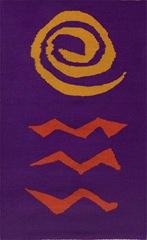
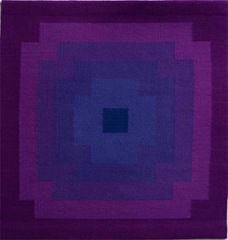
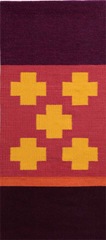
I entered three pieces into two different shows, after making sure there would be no overlap. It’s always interesting what gets accepted and what does not. The following two pieces were accepted into the CraftTexas 2010 exhibit. I had entered a piece into this show before with no luck. They require a résumé in addition to the usual artist statement. I have to admit, that I didn’t do much with either of those items that first time, and yet I was still disappointed when I was rejected! Imagine that! Above are the two pieces that were accepted this year.

Fiber Celebration 2010

Journey

Journey

Entering the following show was a comedy of errors. The week that the entry had to be submitted was the week that we had our record-breaking snow here in Texas. Snow of any kind is rare, but we had inches and inches at that time. I went to the photographer in the morning when the streets were fine, but by the time I got back to my neighborhood, I got stuck in the snow. With some guidance, I was able to make a wide circle and come down my street from another direction, and park in front of the house. I prepared the CD for mailing, but could not get out to mail it. Thankfully, on the deadline day, I was able to very slowly drive to the post office and mail the CD. For this show, Ancient Symbol and Journey were accepted.

Fiber Celebration 2010

Tointon Gallery for the Visual Arts
Union Colony Civic Center
651 10th Avenue
Greeley, CO 80631
June 4 through July 11, 2010