Category Archives: Design

Inspiration with children at the Japanese Garden

Bark-original

Bark before Photoshop

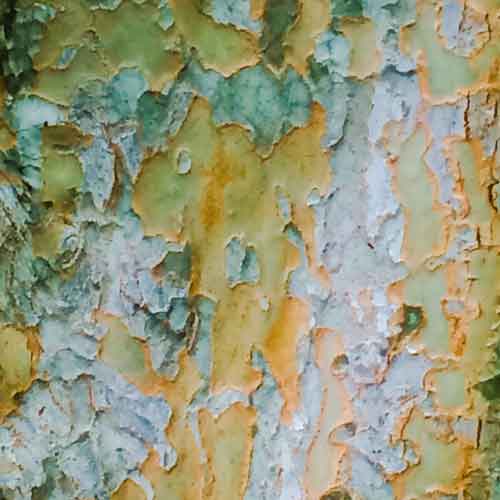
As I mentioned last time I wrote, family is here, so time has been spent going to the zoo, Japanese Garden, and restaurants. Besides the family pictures, I find myself taking inspiration photos also. Keep in mind these pictures are taken with my phone, and after the original was taken, there was manipulation, with a Photoshop app on the phone and with Photoshop on my computer. In the case of the photo above, I played around with it before posting on Instagram.  I have no idea why or what I could do with this photo, but I really like this bark. Also, it’s not from a tree that I am familiar with.

From Instagram

From Instagram With a lot of Photoshop thrown in.

Plain brick path

Plain brick path

Bricks using vibrance adjustment

Bricks using vibrance adjustment

Bricks-hue adjustment

Bricks-hue adjustment

Using contrast and exposure adjustment

Using contrast and exposure adjustment

ArtWalk 2015

IMG_1253(3)

One version of my booth

Back home and the car still sits with its load. The first thing I did was get to the loom. Right before I left, I realized that I had not followed my design for the piece I’m weaving. After playing around with the design as woven, and thinking about it over the weekend, I took out 8 inches this morning. It didn’t take as long to unweave as it did to weave, but it still took a long time. If you’re wondering why I unwove instead of cutting the yarn, it’s because of how much yarn is dyed. So again I have a fresh start, but this time there is a printout of the desired finished product sitting alongside me on the loom bench. Untitled-3

It was a beautiful day for browsing art, although the crowds were down this year. This ArtWalk-er comes every year, but I think this is a new costume. Untitled-2

On the way home, I stopped by Wildseed Farm in Fredericksburg for some flower love. This part of Texas, known as the Hill Country, has a huge German influence. Untitled-1

Cartoon puzzle

Cartoon-puzzle

cartoon puzzle

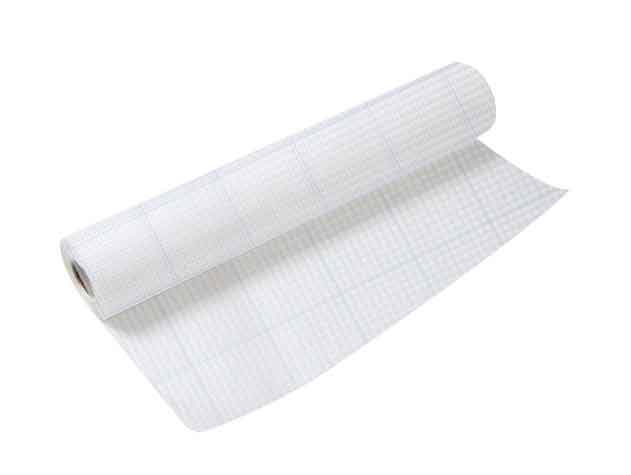
This may not be the my smartest move, but for the piece I’m working on, I decided to make the cartoon myself. I wanted the cartoon to be 25 inches horizontally, so in Photoshop I changed the image size to 25. Yep, there’s no way I can print that. So, also in Photoshop, I fairly evenly divided the drawing into 16 pieces, then copied each section and printed each one out. Then I taped all the pieces together, and voilà, I had a full size cartoon, unwieldy, but a cartoon. Gridded-vellum

Next I cut a section of gridded vellum and traced over the cartoon. Ready to move to the loom, where, unfortunately, the cartoon needed to be smaller, as in 2 inches smaller. Back to the computer. Repeat the process. Weave. And it works!

Now, would it have been better to have copies made at FedEx? I don’t know. My reasons for not going that route are:

  • Frequently copies have to be redone because the employee doesn’t know how to set it up to meet the (my) criteria.
  • I would have had to go back again anyway after I discovered that I had made the wrong size.

Money-wise, by the time I pay for the paper used, printer ink, etc, it might have been less expensive to drive to town, but then I would have to add in fuel. The time spent on this may have been equal.

What do you think? How do you do cartoons? Or maybe the questions is, do you make cartoons?


Surprise! More organized than I realized

Notebook-2jpg notebook-3

Whilst not sleeping the other night, I got out of bed to look for a cartoon of a previously woven piece. To my surprise, I found my notebook of finished pieces, and even more surprising, I found many notes with yarn samples, diagrams, dye formulas, what worked, what didn’t. I have a memory of starting this notebook, but not of getting it so up-to-date. It is by no means a complete record. Many pieces are missing, and there are no dates.

Left Bottom Fish-enlargement-cartoon

Gardening plans have been scuttled because of rain, and even though a brand new 60-inch warp is tied on, there is no weaving because yarns haven’t been dyed. What to do? Work on taxes? Postcards? I’m making a new cartoon for the next weaving. It’s not a very large cartoon, so I enlarged the design in Photoshop, then selected sections and printed. I ended up with five printouts that will be taped together.

Printing

Linoleum print

Linoleum print

The Saturday after my NY visit, I took a monoprint class, something I’ve been wanting to do for a couple of years. The class was a small group and met in the home studio of one of the students. Junanne Peck introduced us to linoleum prints and monotype. I still don’t understand the difference between monoprint and monotype. Maybe it will make sense someday. And no, I don’t know how I got the texture in the print. Just the vagaries of ????

Prairie Fire

Prairie Fire

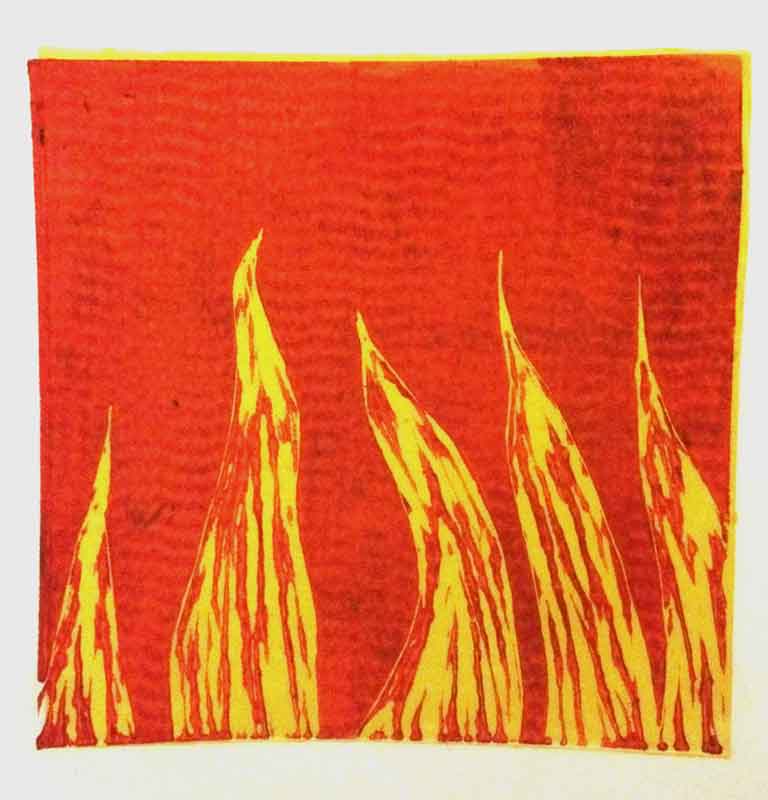
The picture at the top is of one of my prints, which is based on Prairie Fire. I had to think of this as I do my ikat pieces. I printed the paper yellow with the block before I carved the design. Then I took the block and carved my drawing in it. After applying orange ink, I took the same yellow print and printed again with the new carved block. you can see where the edges don’t line up. You can see the ikat piece on the left. My other linoleum print is below. I had a drawing of a spiral made with lines. This one is my first print, and I didn’t think it out very carefully before starting, so the whole thing kind of looks like a flower.

Spiral-print

Artist profile


Carolyn Edlund of Artsy Shark and Arts Business Institute interviewed me for an ABI artist profile. She is a lovely person and made this a completely comfortable process. After our conversation, she sent me a list of questions, and I wrote my answers. Our conversation made me think of a few things, so I’m glad I took notes. Since I am not the best writer in the world, I did ask friends to read my answers and make sure they made sense and/or make suggestions. I LOVE that she included such large images with the article.

If only… I would go to NYC

From Amazon

©Sherri Coffey-Journey

This was designed in the “Matisse way.” Everything was cut out of paper and arranged to make the design.


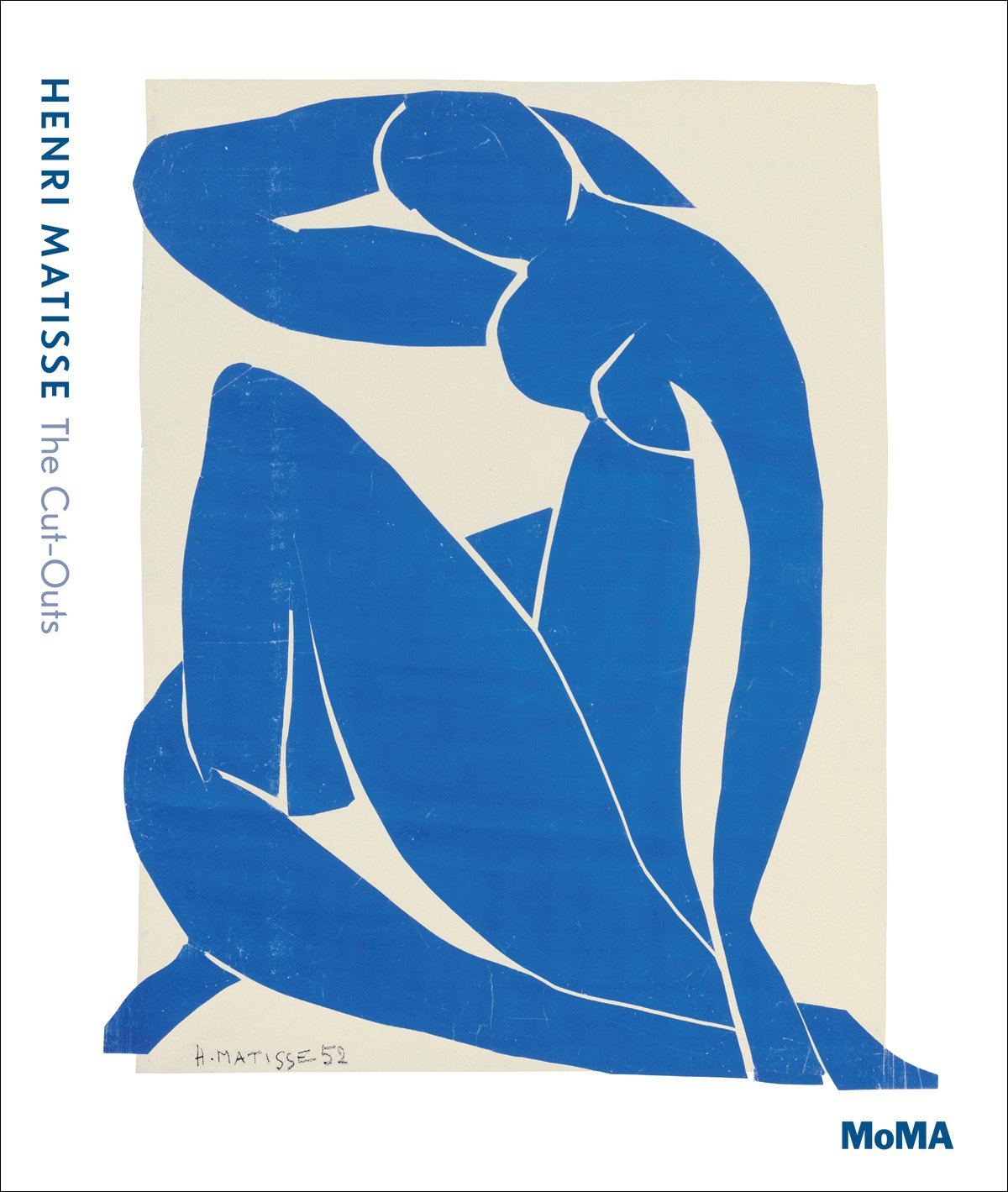
February is probably not the best time to travel to NYC, but I seriously considered a quick, two-day trip to see the exhibition Henri Matisse: The Cut-Outs at MOMA.  Matisse has been a favorite artist of mine for a good long time. I have written, or at least mentioned him often. When I analyze the reason for this admiration, I think it boils down to color. He definitely has a way with color! So, since I am seriously considering a long trip to Peru in the fall, I passed up on going to New York, even though flights and rooms were reasonably priced. I just went to a film about the exhibition instead.

The film was held on one night only, in one local theater only, but it was well worth it to get out in the cold, blustery wind. At night, no less! The film includes additions that would not be available at the actual exhibition (maybe?), such as a segment of ballet, including how it was filmed, a segment on a chapel which Matisse designed, and film of how the exhibition groupings were decided by the curator. I have to admit that I never knew he designed a chapel, and it’s wonderful! Here is an image of my favorite of the many stained glass windows he designed.

One could say that I’ve been consumed by this exhibition. I admit it. I bought the exhibition catalog, but there is no way that it could compare to the film. The pictures on a page of a book in no way allow one to see the scope of the cut-outs. The cut-outs are huge, and are much more impressive when seen on a wall, in context with the rest of cut-outs. But in defense of the book, which I have not examined thoroughly, there is more detailed information about the materials Matisse used. Of course, in the film, there were actual clips of Matisse cutting, of his assistants placing the cut-outs on the wall, and rearranging them at the direction of Matisse.

I am inspired once again, eager to do some designing. I came home all revved up after the viewing. I know I am not alone in this. Other artists have commented to feeling the same. By the way, I have always heard that Matisse started making the cutouts because he couldn’t see well. That was debunked in the film.

 

Plans change

Printer-stand

The week did not go as intended. There has been no weaving during the Great Office Clean-up. Sorting through papers and filing is sooo tedious to me. And so is what I’m weaving right now, at least so far. I took a picture of the before, but I’m too embarrassed to show it to anyone, so I’ll include one thing that’s been driving me nuts. All the cables from the printer, modem, router, phone, external backup drive–there may even be strange cables from off the street. It’s hard to tell they’re such a tangled mess. I got what is probably intended as a rolling cart for the kitchen and loaded it up. Even added photo paper, copy paper, labels, printer ink, and it still looks good. And no cables!!! And I love having all my supplies right there. Humans-since-1982


In addition to the office stuff, I went through magazines. In the October Architectural Digest innovators issue, I found a picture that interested me graphically. It was the illustration in a 1/2 page article about Humans since 1982.  Follow that link and see the kinetic sculpture of clocks. It’s kind of like synchronized swimming. It’s worth a visit and wont’ take long.

So, what will I tackle this week? THE STUDIO. More tedium. After that I really do plan to weave. Each piece of the four on the loom has so many butterflies that I got plastic bags to house each cartoon and its butterflies.

Moving along

Some pictures today… I’ve noticed that the pictures are going up on Facebook and not here. Plus, frankly, there’s just not a lot to write about. It’s cold, and I’m already tired of cold weather. On cold days, my time goes like this:

  • To the studio
  • Start a fire
  • Weave
  • Haul in more wood
  • Stoke the fire
  • Weave
  • Repeat as needed

The weaving–I’m weaving two small pieces on the big loom. They are in the neighborhood of 16 inches wide, and the intent is for them to be more or less square. I was having fun weaving one of the pieces and got to the place where the warp needed to be advanced. That means it’s time to work on the other piece. With both of these I am doing something different, at least for me. Untitled-4

Detail

Detail


When I posted the above pictures, I asked if anyone could tell what it is. Untitled-1 The next pic is below.  Yep, here it is in all its glory. You may notice a lot of big slits. I don’t do slits. In theory, I know how to sew them together, but since I don’t do slits, well, you can see where this is going. And that “hair?” That’s what is in the detail above. That’s going to be everywhere, like Little Orphan Annie. Except more colorful.

And this may be the last picture seen of this project, depending on how those slits go. No matter, at least a something that’s been in my sketchbook for a really long time will have been attempted.


Books, again

Peruvian

book

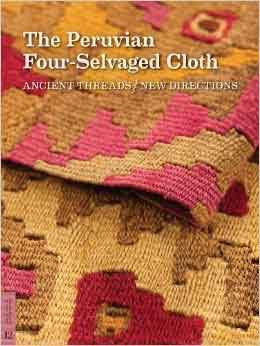
Books! I love books! This past week I have been glancing through and reading a couple of new books—to me, at least. Since I love all Peruvian textiles, when I read a book review in the current issue of Shuttle, Spindle and Dyepot, I had to have The Peruvian Four-Selvaged Cloth by Elena Phipps. Frankly, I was hoping to see some diagrams about how this cloth is made, but in glancing through the book, I did not see any. I have started reading it and am finding it very interesting, from the description of the weaving to the description of the dyeing. One of the things I found interesting is the use of looping within the weaving to produce texture in a piece. I had never heard of looping until I read Donna Kallner’s blog. She has classes, a book, and videos about this process. Maybe I’ll have to learn how in my spare time. Something else I like about this book is the section on modern weavers and their take on four-selvedge weaving. James Bassler and Sheila Hicks are two of the artists included in this section. If you do a search for Bassler, you’ll find many pages, but here’s a link to Craft in America page. The same could be said for Hicks, but here are a few sites: Pinterest, website, NY Times article. Disclaimer–I think the Pinterest site is a compilation from various pinners, but still interesting.

Mirrix-loom

measuring

Now you might be wondering about the other picture on this page–More later…